The most expensive brewery hose you'll ever buy is the one that forces a complete product recall due to biofilm contamination. Maintaining the integrity of your transfer lines is not merely a matter of routine; it's a fundamental pillar of product purity and operational safety. Understanding exactly how to clean and maintain brewery hoses prevents the premature degradation of expensive equipment whilst ensuring that your beer remains untainted by bacterial growth. It's a technical discipline that requires a deep understanding of material science and chemical interaction.
We recognise that the delicate balance between aggressive chemical efficacy and material preservation is a significant challenge for modern production facilities. This professional guide provides a rigorous protocol for cleaning and maintaining brewery hoses to extend their lifespan and ensure compliance with the latest food safety standards. We'll examine the essential differences between cleaning and sanitising, the specific roles of caustic and acid cleaners, and the vital importance of documenting your hygiene cycles to meet 2026 regulatory requirements.
Key Takeaways
- Understand the critical risks associated with biofilm formation in surface imperfections and why hygiene remains the foundation of brewery fluid management.
- Master the technical steps of how to clean and maintain brewery hoses through a rigorous protocol of preliminary rinsing and structured chemical application.
- Evaluate the chemical resistance of different hose materials to ensure your chosen cleaning agents do not cause premature polymer degradation or structural failure.
- Implement professional storage and handling practices that protect the structural integrity of your hoses from mechanical stress and environmental damage.
- Recognise the operational advantages of sourcing high quality food grade hoses directly from a specialist UK manufacturer to ensure maximum material compatibility.
If you require technical assistance regarding our product specifications, please contact our team for expert advice.
The Critical Role of Hygiene in Brewery Hose Management
Hoses are often the most vulnerable components within a brewery's fluid transfer system. Unlike the rigid, high-polish surfaces of stainless steel vessels, flexible transfer lines are susceptible to mechanical wear and internal stress. This vulnerability stems from the nature of the polymers used in their construction; even the most advanced materials can develop microscopic surface imperfections through regular use. If a brewer doesn't fully understand how to clean and maintain brewery hoses, these tiny fissures become the primary breeding ground for spoilage organisms.
Maintaining high standards isn't just about appearances; it's about protecting the specific flavour profile and stability of your beer. Organic soils, such as proteins and hop resins, provide the nutrients necessary for microbial growth. Without a rigorous cleaning protocol, these soils build up and compromise the efficacy of your sanitisation phase. It's vital to remember that cleaning and sanitising are two distinct processes. You must remove the physical soil before you can effectively kill the bacteria. This approach aligns with core Brewing Sanitation Principles, ensuring that your equipment remains a sterile conduit rather than a source of contamination.
Understanding Biofilms and Product Spoilage
Biofilms represent a significant threat to product consistency. These aren't merely layers of bacteria; they're complex communities that produce a protective slime layer to shield themselves from standard cleaning agents. Once established, biofilms can cause persistent off-flavours like diacetyl or sourness that ruin a brand's reputation. Simple water rinsing is never sufficient for long term safety because it lacks the chemical power to break these biological bonds. Selecting a high quality reinforced pvc hose with a high-purity internal liner can significantly reduce the risk of initial bacterial attachment.
The Economic Impact of Poor Hose Maintenance
The cost of a proactive maintenance schedule is negligible compared to the financial disaster of a product recall or a ruined batch. Poor hygiene doesn't just affect the beer; it degrades the hose itself. Harsh chemicals left in the line for too long, or the accumulation of mineral beer stone, can lead to the hardening and eventual cracking of the hose lining. This structural failure requires the immediate replacement of the brewery hose, which is an avoidable capital expense. Professional brewers recognise that a disciplined cleaning routine is the most effective way to maximise the lifespan of their equipment whilst protecting their bottom line. By following a structured protocol for how to clean and maintain brewery hoses, you ensure that your facility operates at peak efficiency.
To discuss your specific material requirements with our technical team, please visit our contact page.
Material Compatibility and Chemical Resistance Factors
Selecting the correct polymer is a technical prerequisite for operational longevity. Whilst standard PVC offers basic flexibility, it often lacks the robust chemical resistance required for the aggressive cleaning cycles found in modern breweries. Developing a technical understanding of how to clean and maintain brewery hoses requires an appreciation of how different polymers react to heat and caustic agents. High temperatures, often exceeding 60°C during sanitisation, can accelerate chemical degradation, leading to plasticiser migration or structural embrittlement. In addition to thermal stress, the use of abrasive mechanical tools must be strictly avoided; metal brushes or scourers create deep scratches in soft plastic linings that serve as permanent harbours for bacteria.
By adhering to FDA's HACCP principles, brewers can identify where material failure might introduce physical or biological hazards into the production line. This systematic approach to risk management highlights the necessity of using materials that can withstand repeated exposure to both alkaline and acidic solutions without losing their flexible properties or leaching unwanted compounds into the product. It's a matter of ensuring that the hose remains chemically inert throughout its entire service life.
Common Brewery Chemicals and Their Effects
Sodium Hydroxide, or caustic soda, is the primary agent for removing organic soils, yet its high pH can be punishing on a basic pvc tube over extended periods. Prolonged exposure without adequate rinsing can lead to a yellowing of the material and a loss of elasticity. For sanitisation, Peracetic Acid (PAA) is highly effective due to its broad-spectrum antimicrobial activity and lack of harmful residues. Brewers must also remain vigilant against chlorine-based cleaners. Whilst effective at killing microbes, chlorine can cause catastrophic pitting in any adjacent stainless steel fittings and may permeate certain polymers, leaving persistent medicinal off-flavours in the beer.
Selecting Materials for Chemical Durability
For facilities utilising high-pressure cleaning systems, a reinforced pvc tube provides the necessary burst resistance and dimensional stability. These hoses are engineered to maintain their bore shape under vacuum and pressure, which is essential for consistent flow rates. In more extreme chemical environments, Fluoropolymers such as PTFE or FEP offer near-total inertness, though they require specialised handling to prevent kinking. Regardless of the base polymer, a smooth bore design is an absolute requirement; it ensures that turbulent flow during the cleaning cycle can effectively lift and carry away soils. If you're unsure about the compatibility of your current chemicals with your existing lines, we recommend you consult with our technical department for a detailed material assessment.
If you require technical guidance on selecting the appropriate hose grade for your facility, please reach out to our specialist engineers.
Establishing a Standard Cleaning and Sanitisation Protocol
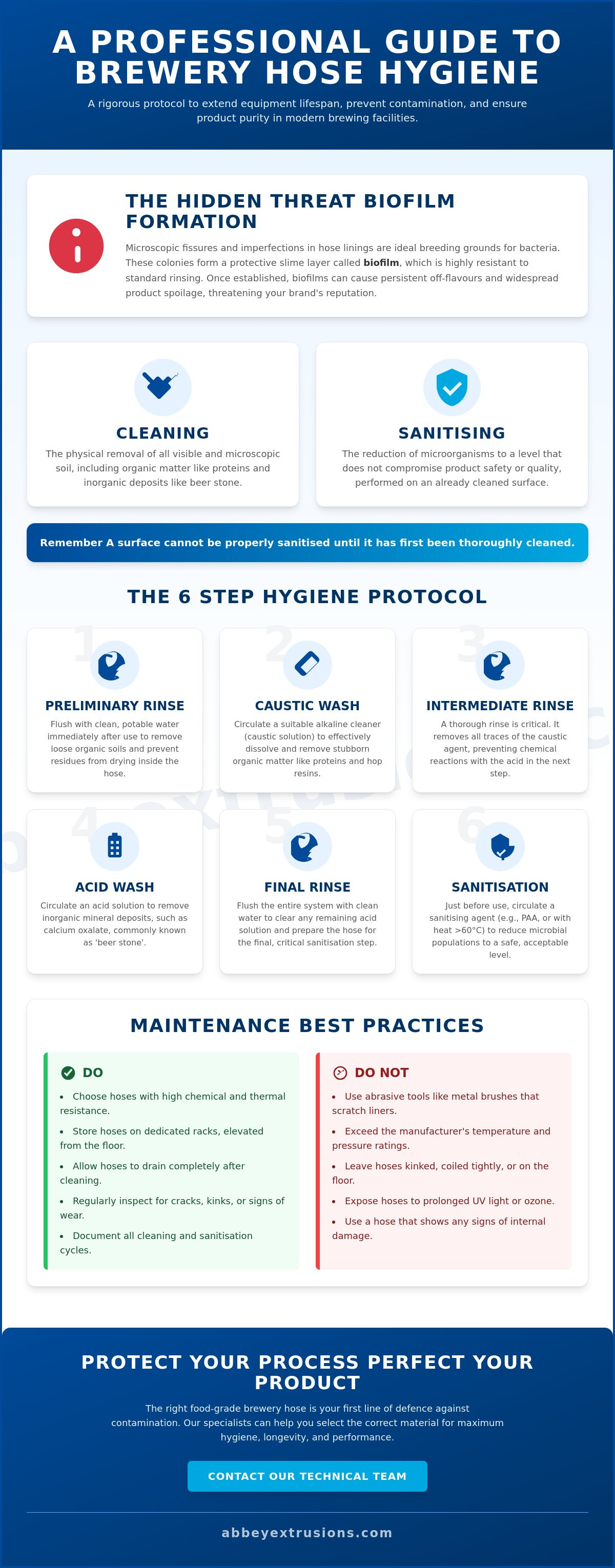
A repeatable and documented cleaning protocol is the only way to ensure the consistent performance of your transfer lines. When considering how to clean and maintain brewery hoses, one must adopt a methodical approach that addresses both visible debris and microscopic threats. This process begins with a preliminary warm water rinse. This initial flush should be performed at approximately 40 to 50 degrees Celsius to effectively dislodge bulk solids, yeast cells, and hop resins without "setting" the proteins against the internal wall. It's a foundational step that preserves the efficacy of the subsequent chemical stages by reducing the organic load.
Following the rinse, an alkaline wash is required to break down organic matter. Sodium hydroxide or specialised brewery detergents should be circulated at a concentration and temperature recommended by the chemical manufacturer, typically between 60 and 80 degrees Celsius. This phase is critical for stripping away the protein films that otherwise lead to beer stone accumulation. After the alkaline cycle, an intermediate rinse with potable water is essential to neutralise the interior and remove all traces of the detergent before the final sanitisation step. This structured sequence ensures that the chemical agents can work directly on the hose surface without interference from residual soils.
The Four Stage Cleaning Cycle
The standard operational cycle follows a linear progression to ensure maximum hygiene. Step one involves a warm water flush to dislodge loose debris and temper the material. Step two utilises a circulated detergent solution, specifically an alkaline cleaner, at controlled temperatures to dissolve organic proteins and resins. Step three requires a thorough rinse with potable water to ensure the line is chemically neutral. Finally, step four is the application of a food grade sanitiser to eliminate any remaining microbial presence, ensuring the line is safe for production.
Sanitisation and Pre Use Preparation
Effective sanitisation is dependent on both concentration and contact time. Most acid-based sanitisers require at least ten to fifteen minutes of contact to be fully effective against brewery-specific spoilage organisms. Preparing a brand new brewery hose for its first use is a step many operators overlook. During the extrusion process, trace amounts of manufacturing lubricants or release agents can remain on the internal bore. Unlike some suggestions to boil hoses, which can damage the bonding of reinforced layers, new hoses should undergo an extended alkaline wash followed by a citric acid rinse. This ensures the surface is completely passivated and free of industrial residues before the first batch of beer is transferred. Before production begins, verify cleanliness by checking the final rinse water for clarity and pH neutrality.
For bespoke advice on maintaining your specific fluid transfer systems, please contact our technical department.
Practical Maintenance and Storage for Hose Longevity
Mechanical care is an essential component of operational safety that is frequently overlooked in favour of chemical hygiene. Whilst mastering how to clean and maintain brewery hoses involves rigorous sanitation, the physical handling of the equipment determines its ultimate service life. Improper coiling is one of the leading causes of premature failure. If a hose is wound too tightly, it creates constant internal stress on the reinforcement layers and the inner liner. Over time, these stress points become permanent weak spots that are prone to kinking or bursting under pressure. We recommend coiling hoses in large, loose circles to preserve the natural bend radius of the material.
Environmental factors also play a significant role in polymer degradation. Exposure to direct sunlight introduces ultraviolet (UV) radiation, which can break down the molecular bonds of the plastic, leading to surface crazing and brittleness. Additionally, ozone generated by large electric motors in a production environment can attack certain hose materials. Draining and drying each brewery hose completely before storage is a vital step. Stagnant water trapped inside a coiled hose not only encourages microbial growth but can also lead to a persistent musty odour that is difficult to remove through standard cleaning cycles.
Environmental Protection and Storage Solutions
The ideal storage environment for high quality fluid lines is a cool, dark, and well-ventilated area. Storing equipment away from temperature extremes prevents the expansion and contraction cycles that fatigue the polymer structure. Avoid the common practice of hanging hoses over thin pegs or nails. This concentrated weight causes the hose to stretch and the walls to thin at the contact point. Instead, utilise dedicated hose racks or wide saddles that distribute the weight evenly across a larger surface area. This simple change in storage behaviour significantly reduces mechanical fatigue and ensures the equipment remains ready for immediate use.
Physical Inspection and Replacement Criteria
A structured inspection routine allows operators to identify potential failures before they result in batch loss. Internal lining failure often manifests as pitting, bubbling, or significant discolouration. If the internal bore feels rough or shows signs of erosion, the hose must be decommissioned immediately as it can no longer be effectively sanitised. Externally, any sign of the reinforcement braid or wire becoming visible through the cover is a critical safety risk. We suggest implementing a scheduled replacement plan based on your specific usage frequency and the aggressiveness of your cleaning chemicals. If your current equipment shows signs of wear, we invite you to enquire about our replacement food grade hoses to ensure your facility maintains its high standards of purity.
To discuss your specific manufacturing requirements or to request a technical data sheet, please speak with our engineering department.
Choosing the Right Brewery Hose for Easier Maintenance
The final stage of ensuring operational excellence is the selection of the equipment itself. Choosing a hose that is engineered specifically for the rigours of a production environment simplifies the process of how to clean and maintain brewery hoses from the outset. When you source directly from a UK manufacturer, you gain a level of material traceability and technical support that is often missing from mass-produced imports. High quality food grade hoses are designed with maintenance in mind, featuring internal bores that are polished to a high degree of smoothness to prevent the mechanical anchoring of organic soils.
The Advantages of Specialist Brewery Hosing
Our dedicated brewery hose range is manufactured to withstand the specific thermal and chemical stresses encountered in modern facilities. The smooth inner walls are a critical feature; they ensure that the velocity of your cleaning solutions remains consistent throughout the line, effectively lifting proteins and resins without leaving residual shadows in the bore. Additionally, our reinforced designs are built to endure the heavy foot traffic and mechanical abrasion common in busy production areas, ensuring that the external cover remains intact and protective over years of service.
Custom Solutions for Professional Brewers
Every facility has a unique layout, and standard off-the-shelf solutions often lead to inefficient hose routing. We provide bespoke extrusion profiles and custom lengths tailored to your specific brewery needs. This customisation allows you to minimise the number of fittings and couplings required, which reduces the number of potential bacteria traps in your fluid system. This strategic approach to equipment selection is the final piece of the puzzle in mastering how to clean and maintain brewery hoses for long term performance. By adhering to strict British manufacturing standards, we ensure that every length of hose provides the reliability and durability required to reduce your long term operational costs.
For professional assistance with your industrial hosing requirements, please get in touch with our technical team.
Optimising Your Brewery Fluid Systems for the Future
Mastery of how to clean and maintain brewery hoses represents a long-term investment in the safety and reputation of your brand. It's about combining the chemical protocols and physical handling techniques discussed throughout this guide into a seamless operational standard. By prioritising smooth-bore designs and proper storage, you protect your facility from the high costs of batch contamination and premature equipment failure. Consistency in these routines ensures that your transfer lines remain a reliable asset rather than a liability. Precision matters in every batch.
As a specialist UK based manufacturer since 1985, we provide the engineering precision required for modern fluid transfer. Our expertise in food grade and brewery hosing allows us to offer bespoke extrusion capabilities that address unique industrial challenges. We understand the specific pressures of the brewing industry. To find the ideal hosing solution for your production requirements, please visit our contact page to speak with our technical team. We remain committed to helping you maintain the highest standards of purity in your production lines.
Frequently Asked Questions
How often should brewery hoses be cleaned and sanitised?
Brewery hoses should be cleaned at least once every two weeks using an alkaline cleaner to prevent the accumulation of yeast and bacteria. A quarterly acid wash is also recommended to remove mineral deposits like beer stone. Following a strict, documented schedule is essential for maintaining product purity and ensuring you understand how to clean and maintain brewery hoses effectively over the long term.
Can I use boiling water to clean my reinforced PVC brewery hoses?
You should avoid using boiling water to clean reinforced PVC hoses as the extreme heat can compromise the structural bonding between the reinforcement layers. Most industrial PVC hoses are rated for temperatures up to 60 or 80 degrees Celsius; exceeding these limits leads to material softening and permanent deformation. Stick to the manufacturer's specified temperature range to ensure the safety and longevity of your transfer lines.
What is the best way to remove beer stone from the inside of a hose?
The most effective method for removing beer stone is a periodic acid wash using a phosphoric or nitric acid solution. Whilst alkaline cleaners remove organic proteins, only acidic solutions can dissolve the calcium oxalate minerals that form beer stone. Regular acid treatment prevents these minerals from creating a rough surface where biofilms can easily attach and flourish within your fluid system.
How do I know if my brewery hose needs to be replaced?
A brewery hose requires immediate replacement if you observe internal pitting, persistent discolouration, or any visible external reinforcement. If the internal bore feels rough or if you can no longer achieve a neutral pH after rinsing, the material has likely degraded beyond the point of safe use. Regular physical inspections are the best way to identify these failure points before they result in a batch recall.
Is it necessary to clean a brand new brewery hose before its first use?
It is absolutely necessary to clean a new hose to remove manufacturing residues such as trace lubricants or release agents. A brand new line should undergo a full alkaline wash followed by a thorough rinse before it ever touches a production batch. This ensures that no industrial contaminants affect the flavour or safety of your beer during its first transfer through the brewery system.
What are the risks of using domestic cleaning products on brewery hoses?
Domestic cleaning products often contain perfumes and dyes that can permeate the hose lining and leave persistent off-flavours in your product. These products are rarely formulated to handle the specific organic loads found in a brewery or to provide the necessary level of sanitisation. Using unverified chemicals also risks damaging the polymer structure of the hose, leading to premature material failure and potential contamination.
How should brewery hoses be stored when not in use to prevent damage?
Hoses should be drained completely and stored in loose coils in a cool, dark environment away from direct sunlight. Storing them on wide racks prevents the stretching and wall thinning that occurs when they are hung over narrow pegs. Ensuring the interior is dry before storage prevents microbial growth and protects the material from ozone and UV degradation that can cause surface cracking.
Can I use a pressure washer to clean the interior of my brewery hosing?
Using a pressure washer on the interior of a hose is not recommended because the concentrated force can score or pit the soft internal lining. These mechanical scratches create perfect harbours for bacteria and biofilms that are nearly impossible to remove with standard chemicals. Instead, rely on the turbulent flow of a circulated cleaning solution at the correct temperature and concentration to maintain hygiene.

Article by
Bryan Cowan
Bryan Cowan is the Founder and Managing Director of Abbey Extrusions Ltd, a leading UK manufacturer of high-quality plastic tubes and hoses. With over 40 years of industry experience, Bryan established the company in 1985, growing it from a startup into a BS ISO9001-registered supplier for global sectors including aerospace, automotive, and pharmaceuticals.
Disclaimer
This article is intended for informational purposes only. Please ensure you seek expert advice or carry out your own research to confirm the information is suitable for your specific needs.