How much does a ten-minute production stoppage actually cost your facility when you factor in engineer labour and lost throughput? Whilst the initial purchase price of pneumatic or robotic components is a frequent focus during procurement, this figure rarely reflects the true impact on the annual balance sheet. Frequent hose failures due to kinking or abrasion create a cycle of reactive maintenance that erodes profitability. By calculating ROI on durable polyurethane hoses, you can shift the internal conversation from simple upfront expenditure to long-term operational efficiency.
We recognise that justifying a transition to high-performance materials requires more than just anecdotal evidence of durability. You require a clear, methodical framework to demonstrate how reduced maintenance intervals and the prevention of component wear translate into tangible savings. This article provides the technical evidence needed to support a procurement upgrade, focusing on the total cost of ownership. We will guide you through the specific metrics of material performance and the financial logic required to secure a more stable and cost-effective production environment.
Key Takeaways
- Identify the hidden financial impact of unplanned downtime and labour costs associated with frequent industrial hose failures in high cycle environments.
- Understand the technical properties of high performance polyurethane, including superior abrasion and flexural fatigue resistance, that prevent kinking and premature wear.
- Master a structured framework for calculating ROI on durable polyurethane hoses by comparing initial expenditure against the reduction in replacement intervals.
- Compare the total cost of ownership between standard PVC and polyurethane to justify procurement upgrades that stabilise long term maintenance budgets.
- Discover the operational advantages of sourcing bespoke components directly from a specialist UK extruder to ensure material precision and reliability.
To discuss your specific industrial requirements and receive a tailored technical assessment, please contact our engineering team.
The financial impact of industrial hose failure
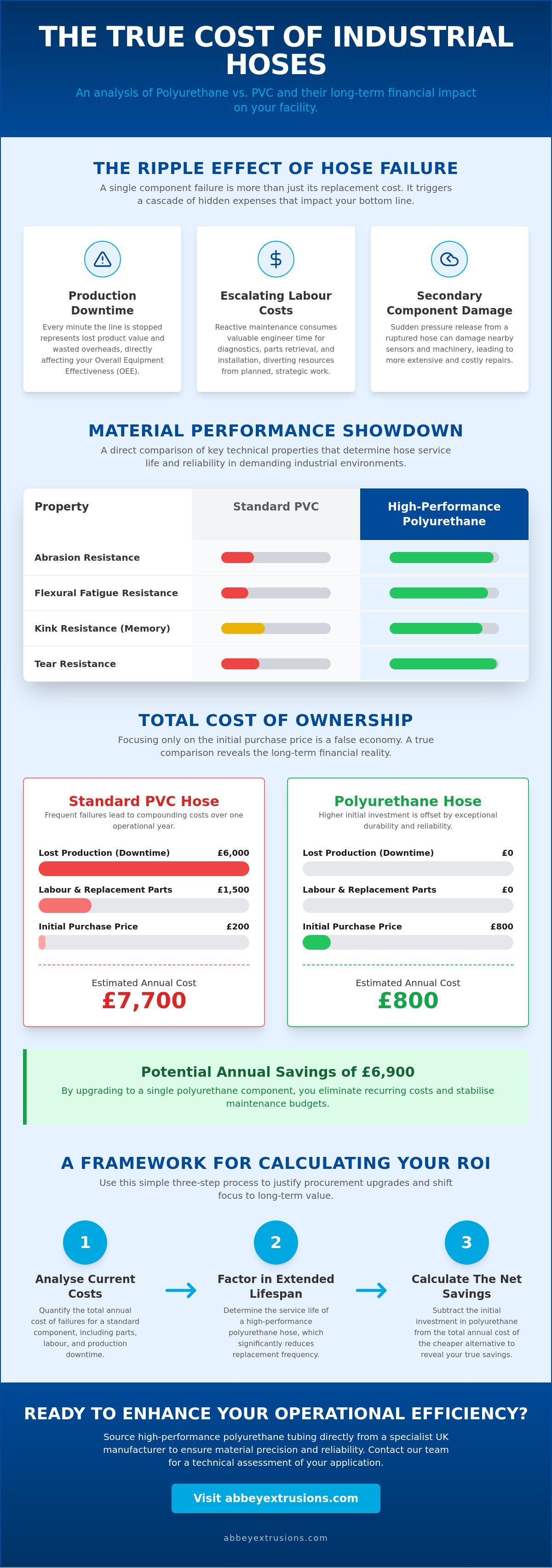
Industrial facilities often overlook the cumulative expense of component failure. A single ruptured hose in a robotic assembly line does not merely represent a few pounds in material cost. It triggers a cascade of financial losses. When calculating ROI on durable polyurethane hoses, we must first account for the hidden drain on resources. This includes the time spent by maintenance teams diagnosing the fault, retrieving parts, and performing the replacement. In high-cycle environments, these recurring events quickly eclipse the cost of the initial installation.
Quantifying the cost of maintenance downtime
Every minute a production line remains stationary affects the Overall Equipment Effectiveness (OEE) and profit margins. To accurately measure this, managers should calculate the total hourly rate of a halted line, which includes lost product value and fixed overheads. Emergency procurement adds to the burden; rush shipping fees and premium prices for immediate stock can inflate costs significantly. The administrative burden of processing frequent replacement orders consumes valuable procurement time that could be better spent on strategic sourcing.
There is also the significant risk of secondary damage. When a hose fails under pressure, the sudden release of pneumatic energy can damage sensitive sensors or nearby mechanical components. This necessitates even more extensive repairs and longer periods of inactivity. By selecting a high-grade polyurethane tube, which offers vastly superior mechanical properties, facilities can mitigate these risks effectively.
Material fatigue and its role in mechanical failure
Standard PVC hoses often struggle with flexural fatigue in dynamic applications. Over time, these materials develop memory issues or permanent kinking, which restricts flow and creates stress points. The abrasion resistance of polyurethane is a critical factor here, as it allows the hose to withstand constant movement without thinning or cracking. Whilst cheaper alternatives might seem attractive during the initial build, their tendency to fail prematurely makes them a liability. Calculating ROI on durable polyurethane hoses reveals that the extended lifespan of the material directly supports system reliability and prevents the erratic performance associated with worn components.
If you require technical guidance on material compatibility for your specific application, please contact our specialist team.
Technical properties that extend polyurethane service life
The technical superiority of polyurethane stems from its unique molecular architecture, which effectively bridges the gap between the elasticity of rubber and the durability of hard plastics. This material is engineered to withstand the rigorous demands of modern industrial processes where standard polymers often fail. When engineers are calculating ROI on durable polyurethane hoses, they must look beyond the purchase price and evaluate how these physical properties prevent system failure. Polyurethane maintains its structural integrity under extreme mechanical stress, making it the preferred choice for high-cycle pneumatic systems and robotic assemblies.
Abrasion and tear resistance in abrasive environments
One of the most significant advantages of a high-quality polyurethane tube is its exceptional resistance to external wear. In environments where hoses are constantly dragged across concrete floors or subjected to the internal friction of powder transfer, polyurethane outperforms vinyl and rubber by a significant margin. Its molecular structure is specifically designed to resist crack propagation. This means that if the surface is nicked or scratched, the material prevents the damage from spreading through the hose wall. This characteristic is essential for maintaining pressure integrity in grain handling or abrasive media transport where wall thinning is a common cause of failure.
Flexibility and low temperature performance
Dynamic applications, such as those found in robotic arm movements, require a material that can endure millions of flex cycles without losing its original shape. Polyurethane offers remarkable flexural fatigue resistance, allowing it to maintain a tight bend radius without kinking or collapsing. Unlike PVC, which can become brittle and prone to cracking as temperatures drop, polyurethane remains flexible at temperatures as low as -40°C. This consistent performance reduces the mechanical strain on fittings and connectors, which are often the weakest points in a fluid power system.
The choice between ether-based and ester-based polyurethane also allows for precision engineering based on the operating environment. Ether-based tubing is highly resistant to moisture and microbes, whilst ester-based variants offer superior resistance to oils, fuels, and solvents. By selecting the correct material grade, facilities can significantly extend the interval between maintenance cycles. If you require advice on which material grade best suits your operational environment, our team can help you optimise your hose specifications to ensure maximum service life.
To discuss your specific industrial requirements and receive a tailored technical assessment, please contact our engineering team.
Comparing total cost of ownership between PVC and polyurethane
In the context of industrial procurement, the pressure to minimise upfront capital expenditure often leads to the selection of standard materials. Whilst a reinforced pvc tube provides a cost-effective solution for static, low-pressure water or air transfer, it frequently lacks the resilience required for dynamic automation. When calculating ROI on durable polyurethane hoses, we must analyse how the frequency of replacement dictates the true value of the component. A cheaper hose that requires quarterly replacement is invariably more expensive than a premium alternative that serves for several years without intervention.
The purchase price trap in industrial procurement
The financial impact of choosing inferior materials is best understood by visualising the cost curve over a five year period. Cheap materials create a sawtooth pattern of expenditure; every failure requires a new purchase, shipping costs, and a maintenance event. These frequent, small transactions often hide a substantial annual maintenance spend that remains invisible if only the unit price is monitored. By reducing the number of annual purchase orders through the use of more durable components, facilities also achieve administrative savings. This streamlines inventory management and allows procurement teams to focus on high-value strategic tasks rather than reactive parts sourcing.
Lifetime performance metrics for industrial hoses
To move beyond surface-level comparisons, engineers should evaluate hoses based on specific performance metrics. A primary indicator is the number of cycles a hose survives before failure. In robotic applications, a polyurethane tube can endure millions of flex cycles, whereas standard vinyl may develop stress cracks within months. Beyond the hose itself, we must factor in the cost of wasted compressed air from minor leaks that often go unnoticed. Even a pinhole leak caused by material degradation can lead to significant energy losses over time. Additionally, sudden hose failure during a production run can lead to a high scrap rate, as delicate processes are interrupted mid-cycle. Choosing the cheapest option often results in the highest lifetime expenditure once these operational variables are correctly weighted.
For a detailed breakdown of how our technical specifications can reduce your operational expenditure, please contact our engineering team.
A framework for calculating your return on investment
Whilst the previous sections established the technical and financial theory, calculating ROI on durable polyurethane hoses requires a structured approach to data. This framework allows maintenance managers to present a robust business case for material upgrades based on verifiable factory floor metrics. By following a methodical sequence, you can transform anecdotal evidence of hose failure into a precise financial projection that resonates with senior procurement officers.
- Step 1 Identify the current replacement interval of your existing hoses by auditing maintenance logs from the previous twelve months.
- Step 2 Calculate the total cost of a single failure event, including the engineer labour rate and the value of lost production during the stoppage.
- Step 3 Project the extended lifespan of the system using high grade polyurethane, typically based on its superior flexural fatigue and abrasion resistance.
- Step 4 Compare the multi year expenditure of both options to reveal the cumulative savings generated by reducing the frequency of interventions.
- Step 5 Determine the payback period for the initial investment by identifying the exact point where the savings from avoided failures exceed the higher purchase price.
Data points required for an accurate ROI calculation
The accuracy of your ROI model depends on the quality of the input data. You must gather historical maintenance logs to identify exactly how many times a specific line has been halted due to pneumatic or hydraulic hose failure. It's essential to input current labour rates for your maintenance engineers, including any overtime premiums required for emergency repairs. Furthermore, you should work with production managers to estimate the cost of lost production per hour. This figure often represents the largest variable in the calculation, as even a short interruption can lead to significant throughput losses in high volume manufacturing environments.
Interpreting the results for your procurement team
When presenting your findings, focus on the payback period expressed in months rather than years. Industrial stakeholders are more likely to approve an upgrade if the initial expenditure is recouped within the first two or three replacement cycles. Highlight the anticipated reduction in emergency maintenance calls, which allows your technical team to focus on preventative rather than reactive tasks. Using these figures, you can effectively justify a switch to a high performance nylon tube or polyurethane solution. This data driven approach ensures that procurement decisions are based on long term stability and technical competence. If you need assistance with specific material data to refine your model, you can request a technical consultation with our specialists.
To discuss your specific industrial requirements and receive a tailored technical assessment of our manufacturing capabilities, please contact our specialist team.
Sourcing high performance polyurethane tubing from a UK manufacturer
Sourcing components from a specialist UK extruder provides a level of quality assurance that is often unattainable through international commodity markets. When calculating ROI on durable polyurethane hoses, the reliability of the supply chain is just as critical as the material itself. A domestic manufacturer ensures that every batch of polyurethane tube meets stringent British quality standards and offers full material traceability. This consistency prevents the unpredictable failures associated with variable material grades, which can otherwise invalidate your financial projections. By working directly with the manufacturer, you gain access to deep technical expertise that helps you align material specifications with your specific ROI objectives and long term operational goals.
Custom extrusion and tube forming for specific needs
Standard off the shelf hoses often fail because they are forced into configurations that exceed their natural bend radius. This creates internal stress and accelerates material fatigue at the connection points. Through professional tube forming, we provide pre-shaped components that fit perfectly within your machinery's specific architecture. These pre-formed tubes eliminate the risk of kinking and significantly extend the service life of the entire pneumatic assembly. Our engineering team assists in selecting between ester and ether based polyurethane, ensuring the material is perfectly suited to your operating environment, whether it involves moisture exposure or chemical contact. Alongside this, the benefit of rapid lead times from a domestic facility allows you to maintain leaner inventory levels without risking production delays.
Partnering with Abbey Extrusions for industrial solutions
Abbey Extrusions leverages over 40 years of manufacturing expertise from our base in Leicestershire to deliver precision engineered solutions to the global industrial market. We understand that excellence in the manufacturing sector is built on stability, precision, and technical competence. Precision is our standard. Our clients have access to a comprehensive range of technical plastic tubing, including specialised nylon tube and reinforced profiles. We encourage a collaborative approach, where our engineers work alongside your maintenance and procurement teams to identify the most cost effective material choices. You may request a technical consultation to optimise your hose performance and ensure that your procurement strategy is rooted in technical reality. This focus on calculating ROI on durable polyurethane hoses ensures that your facility operates with maximum efficiency and minimal unplanned downtime.
To discuss your specific industrial requirements and receive a tailored technical assessment, please contact our engineering team.
Optimising industrial performance through technical precision
Transitioning from reactive maintenance to a strategic procurement model requires a fundamental shift in how we evaluate industrial components. By calculating ROI on durable polyurethane hoses, facilities can move beyond the purchase price trap and focus on the total cost of ownership. The technical superiority of high performance polyurethane provides the abrasion resistance and flexural fatigue resistance needed to survive millions of cycles in demanding environments. This durability directly translates into reduced maintenance downtime and lower administrative burdens for your procurement team.
Abbey Extrusions has been a leading UK manufacturer since 1985, providing the technical competence required to support these upgrades. Our specialist expertise in custom tube forming and our extensive range of industrial polymers ensure that your systems operate at peak efficiency with minimal intervention. We invite you to contact our technical team to discuss your polyurethane requirements and discover how our precision engineering can stabilise your long term operational expenditure. We look forward to helping you achieve a more reliable and cost effective production environment.
Frequently Asked Questions
How long does a polyurethane hose typically last compared to PVC
Polyurethane typically lasts three to five times longer than standard PVC in high cycle or abrasive environments. This durability is due to its superior resistance to flex fatigue and surface wear. Whilst PVC may become brittle or crack within months of heavy use, polyurethane maintains its structural integrity for years. This extended service life is a core factor when calculating ROI on durable polyurethane hoses for industrial facilities.
Is polyurethane tubing suitable for food grade applications
Yes, specific grades of polyurethane are manufactured to meet food grade standards for the transfer of dry foods and liquids. These hoses are resistant to the cleaning chemicals and organic oils often found in food processing environments. It's essential to specify food grade requirements during the procurement phase to ensure compliance with relevant safety regulations and to maintain full material traceability throughout the production cycle.
What is the main difference between ether based and ester based polyurethane
Ether based polyurethane offers superior resistance to moisture, microbes, and hydrolysis, which makes it the ideal choice for wet or humid environments. In contrast, ester based polyurethane provides better resistance to oils, fuels, and solvents, along with slightly higher abrasion resistance. Selecting the correct base material ensures the hose doesn't degrade prematurely when exposed to specific industrial fluids or environmental conditions.
Can polyurethane hoses be used in outdoor environments with UV exposure
Standard polyurethane can be sensitive to prolonged UV exposure, which may lead to discolouration or a loss of flexibility over time. However, UV stabilised grades are available for outdoor applications where sunlight is a constant factor. These specialised formulations include additives that prevent the molecular breakdown caused by ultraviolet radiation, ensuring long term stability and performance in external industrial settings.
Why is polyurethane better for robotic applications than other plastics
Polyurethane is preferred for robotics because of its exceptional flexural fatigue resistance and its ability to maintain a tight bend radius without kinking. Robotic arms undergo constant, high speed movements that would cause lesser plastics to fatigue and rupture. Polyurethane's inherent elasticity allows it to return to its original shape repeatedly, which significantly reduces the frequency of maintenance interventions in automated assembly lines.
Does polyurethane tubing require special fittings or connectors
Polyurethane tubing is compatible with most standard push in fittings and compression connectors used in pneumatic systems. Because it is more flexible than nylon, it provides a secure and reliable seal even in dynamic applications. It's important to ensure that the fitting size matches the outside diameter of the tube precisely to prevent leaks and to maintain the pressure integrity of the system.
How do I know if my system would benefit from an upgrade to polyurethane
If you're experiencing frequent hose failures, kinking, or abrasion wear with your current PVC or rubber components, an upgrade is likely beneficial. Systems that involve constant movement, exposure to oils, or fluctuating temperatures often see the greatest improvement in reliability. Calculating ROI on durable polyurethane hoses will help you determine if the anticipated reduction in downtime justifies the initial material change.
What are the temperature limits for standard polyurethane industrial hoses
Standard polyurethane hoses generally operate effectively between -40°C and +70°C. This wide range allows the material to remain flexible in cold storage environments whilst resisting softening in warmer industrial settings. For applications that exceed these specific limits, specialised polymers might be required, but polyurethane remains the most versatile choice for the vast majority of factory floor temperatures and conditions.

Article by
Bryan Cowan
Bryan Cowan is the Founder and Managing Director of Abbey Extrusions Ltd, a leading UK manufacturer of high-quality plastic tubes and hoses. With over 40 years of industry experience, Bryan established the company in 1985, growing it from a startup into a BS ISO9001-registered supplier for global sectors including aerospace, automotive, and pharmaceuticals.
Disclaimer
This article is intended for informational purposes only. Please ensure you seek expert advice or carry out your own research to confirm the information is suitable for your specific needs.