A single millimetre of deviation in your keder cord for fabric structures is often the difference between a seamless installation and a costly, jammed aluminium rail system. You likely understand that in high-tension environments, the integrity of a project relies entirely on the quality of the technical connection. It's frustrating when inferior materials snap under sudden wind loads or degrade prematurely due to UV exposure, whilst the global textile industry faces a deteriorating business climate as reported by the ITMF in March 2026. At Abbey Extrusions, we recognise that precision is not merely a preference but a technical necessity for safety and longevity.
By reading this guide, you'll discover the technical specifications and manufacturing standards required to select high performance cord for demanding industrial settings. We provide the expertise needed to identify the correct cord diameter for specific rail profiles and explain why UK manufactured PVC offers superior weldability. This article previews the essential criteria for securing a reliable supplier capable of delivering bespoke extrusion profiles that uphold our commitment to quality and service whilst meeting the latest regulatory standards, such as the EU Construction Products Regulation that became applicable in January 2026.
To discuss your specific manufacturing requirements with our technical team, please visit our contact page.
Key Takeaways
- Understand how precision extruded cores create a secure mechanical lock within aluminium profiles to prevent fabric failure under high wind loads.
- Learn why high quality PVC and UV stabilisers are essential for maintaining the structural integrity and weldability of keder cord for fabric structures in demanding outdoor environments.
- Identify the critical relationship between internal rail channels and fabric thickness to ensure consistent tensioning without the risk of jamming during installation.
- Explore how high strength piping meets the rigorous demands of the marquee hire and logistics industries whilst adhering to the latest construction product regulations.
- Discover the engineering advantages of sourcing bespoke extrusion profiles from a specialist UK manufacturer to meet the specific requirements of unique architectural designs.
To discuss your specific manufacturing requirements or to request a quote for high-volume orders, please reach out to our technical team via our enquiry page.
Understanding Keder Cord and its Essential Role in Fabric Structures
At its most fundamental level, keder cord for fabric structures serves as the critical interface between a flexible textile and a rigid support frame. It's a solid or flexible extruded core, typically manufactured from specialised PVC, that provides a reinforced edge for industrial fabrics. Whilst the fabric itself provides the surface area, the cord acts as the structural spine, enabling the textile to be securely anchored into aluminium or plastic rail profiles. We specialise in producing these precision extrusions to ensure that every millimetre of the cord contributes to the overall stability and safety of the installation.
The core function of this component is to create a secure mechanical lock. When the fabric is wrapped around the cord and welded or sewn, it forms a keder strip. This strip is then slid into a C-shaped channel within a rail. This method is one of the most reliable awning and fabric attachment methods used in the industry today. Unlike traditional eyelets or fasteners, a keder connection provides a continuous, airtight, and waterproof seal along the entire length of the profile. This continuity is vital for preventing local stress concentrations that could otherwise lead to fabric tearing under heavy loads or during extreme weather events.
The Anatomy of a Keder Connection
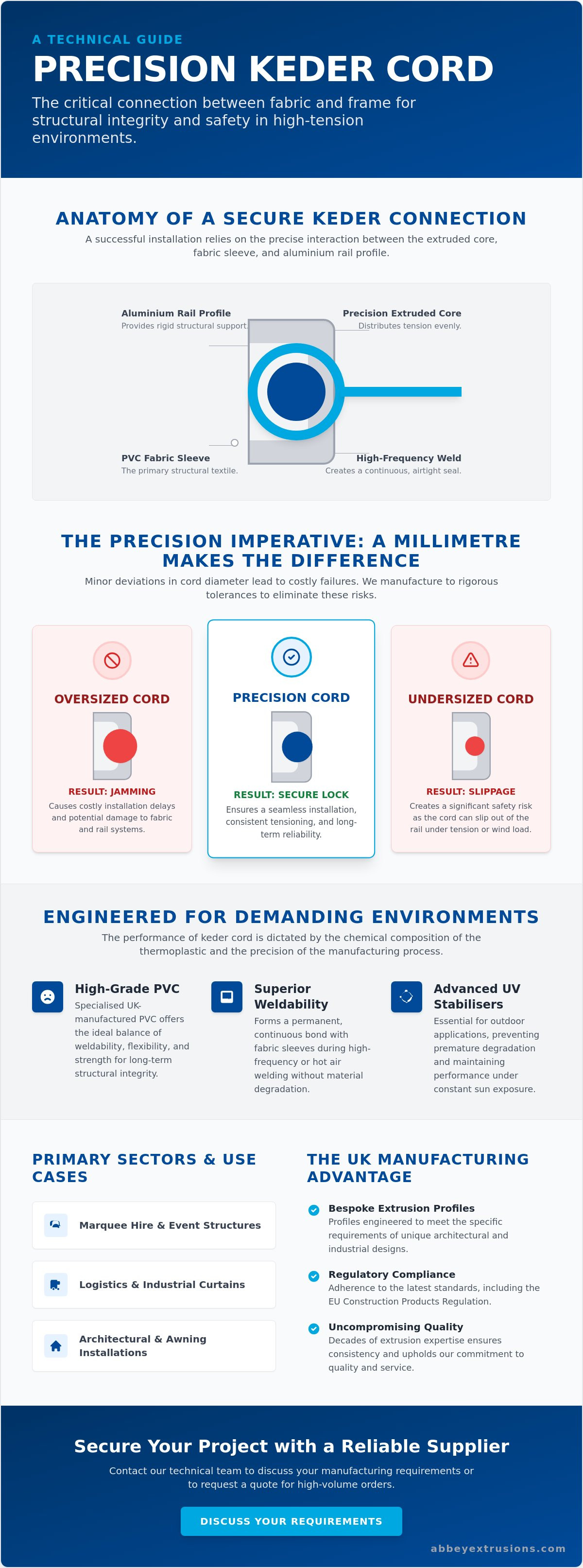
A successful connection relies on the precise interaction between the extruded cord and the fabric sleeve. The cord's primary role is to distribute tension evenly across the entire length of the textile, rather than allowing it to pull on individual points. This is particularly important in large-scale temporary structures, such as event marquees, and permanent architectural installations where wind loading is a constant factor. By using a high performance cord, engineers ensure the fabric remains taut and correctly positioned, which is essential for both aesthetic quality and structural integrity. We understand that in these environments, the cord is often the only thing preventing a structural failure.
Why Precision Extrusion Matters for Performance
Diameter variations, even when minor, often result in significant installation delays and structural failures. If a cord is even slightly oversized, it'll likely jam within the aluminium rail, necessitating costly downtime and potential damage to the fabric. Conversely, an undersized cord might slip out of the profile entirely when under tension. We manufacture our Kedar cord to rigorous tolerances to eliminate these risks. The flexibility of the thermoplastic material is also essential for projects involving curved rail profiles, where the cord must bend without compromising its cross-sectional integrity. Choosing precision extrusions over standard off-the-shelf alternatives ensures a professional finish and long-term reliability for any industrial textile project.
To request a technical data sheet or to discuss material compatibility for your specific industrial application, please get in touch with our specialist team.
Material Properties and the Industrial Extrusion Process
The performance of keder cord for fabric structures is dictated by the chemical composition of the thermoplastic and the precision of the manufacturing process. We specialise in using high grade PVC that offers the ideal balance of weldability and flexibility. This is essential for modern industrial textiles, as the cord must form a permanent bond with the fabric sleeve during high frequency or hot air welding processes. If the material lacks thermal stability, it can degrade or lose its structural integrity when subjected to the high temperatures required for a secure weld.
UV stability is perhaps the most critical factor for outdoor applications like architectural awnings or marquee structures. Without the inclusion of specific UV stabilisers during the extrusion process, PVC becomes brittle and prone to cracking when exposed to prolonged sunlight. Our manufacturing process ensures these stabilisers are evenly distributed throughout the cord, preventing premature failure and maintaining the tension of the fabric over several years. Additionally, the extrusion process is managed to produce a smooth, low friction surface finish. This reduces the force required to slide the keder strip into aluminium rails, which significantly simplifies the installation process for site teams.
The Benefits of Industrial Grade PVC
Industrial grade PVC provides excellent chemical resistance, which is vital for structures located in coastal areas or polluted urban environments. It resists degradation from salt water, acidic rain, and various environmental pollutants that would otherwise weaken the core. We can manufacture these profiles in various shore hardnesses to suit the specific needs of a project. For instance, a softer cord might be required for tight radius curves, whilst a more rigid extrusion provides better support for heavy duty, high tension panels. If you have unique specifications, we invite you to enquire about our bespoke material compounding.
Manufacturing Standards for Consistent Quality
Maintaining tight tolerances is the hallmark of professional plastic extrusion. During the cooling and sizing stages, the temperature of the water bath and the speed of the haul-off must be precisely controlled to prevent the cord from shrinking or warping. This level of control ensures that the diameter remains consistent from the start of the reel to the end. For a deeper look into how we manage these variables, you can read our guide on the engineering principles of plastic extrusion. This rigorous approach to manufacturing is what allows our keder cord to meet the demanding engineering requirements of the modern construction and transport sectors.
To discuss your specific technical requirements or to request samples for testing, please contact our engineering team.
Selection Criteria for Different Industrial Textile Applications
Selecting the correct keder cord for fabric structures requires a precise understanding of the relationship between the cord diameter and the internal channel of the aluminium rail. A common error in specification involves choosing a cord that matches the rail's diameter exactly. This oversight fails to account for the fabric thickness. The final outside diameter of the keder strip is the sum of the cord diameter plus twice the thickness of the fabric. If this total exceeds the rail's internal capacity, the strip won't slide, leading to significant installation delays and potential damage to the textile.
The choice between solid and hollow profiles is another critical technical decision. Solid keder cord provides maximum mechanical strength and pull-out resistance, making it the standard for high-load architectural projects. Hollow profiles, whilst slightly less robust, offer greater compressibility. This makes them easier to pull through exceptionally long tracks or around tight radii where a solid cord might bind. In large-scale manufacturing environments, we often provide colour-coded extrusions. This allows production teams to quickly identify different diameters on the factory floor, reducing the risk of using the wrong specification for a particular batch of fabric panels.
Diameter and Load Bearing Capacity
The diameter of the cord must be matched to the anticipated wind loads and the scale of the structure. For lightweight applications like indoor signage and retail banners, a 3mm to 8mm cord is typically sufficient. These smaller diameters allow for a discreet finish whilst maintaining enough grip for moderate tensioning. When moving to the events sector, 10mm to 15mm cords are the industry standard for marquees and large tents. These sizes provide the necessary surface area to distribute tension across the fabric sleeve without slipping. For the most demanding environments, such as industrial warehouse curtains or heavy-duty truck side systems, we manufacture 20mm plus cord to ensure the assembly can withstand constant mechanical stress.
Single versus Double Flap Configurations
The design of the keder flap, whether single or double, is heavily influenced by the chosen cord profile. Double flap configurations are often used when the fabric needs to be balanced on both sides of the rail, providing a more symmetrical tension profile. This is particularly relevant when integrating with curtainsider pelmet sections in the transport industry, where the keder must remain secure despite constant vibration and wind buffeting. By selecting a cord with the correct shore hardness and diameter, manufacturers can ensure that the keder flap performs reliably throughout the structure's lifespan, regardless of the mechanical style of the attachment.
To receive a tailored quote for your specific industry application, please speak with our technical sales team.
Primary Sectors and Use Cases for High Strength Piping
The versatility of keder cord for fabric structures allows it to serve as a high performance anchoring solution across a diverse range of industrial sectors. In the logistics and transport industry, these extrusions are fundamental to the operation of curtainsider vehicles. The cord must withstand constant aerodynamic pressure and mechanical vibration whilst maintaining a secure seal within the vertical and horizontal rails. We recognise that in this environment, any failure of the keder strip leads to significant safety risks and operational downtime for haulage fleets.
Marine applications present another set of rigorous challenges. Boat sail reinforcement and marine covers require a cord that is entirely resistant to saltwater corrosion and long term UV exposure. Modern architectural shade sails also rely on these precision profiles to achieve the high tension levels required for clean, aesthetic lines in public and commercial spaces. Unlike standard fasteners, the continuous connection provided by the keder ensures that the load is distributed across the entire fabric edge, which is vital for the longevity of permanent outdoor installations.
Events and Temporary Structures
The marquee hire and events sector is perhaps the most demanding industry regarding the frequency of assembly and disassembly. High quality keder is essential here to prevent fabric tearing at the rail entry point, which is the most common site of failure during rapid deployment. A precision extruded cord ensures the keder strip glides smoothly into the aluminium profile without catching or jamming. This speed of installation is a critical commercial advantage for marquee contractors. Furthermore, the airtight seal created by the cord provides essential weather protection, ensuring that temporary structures remain dry and secure during inclement weather.
Signage and Large Format Advertising
We've observed a significant trend towards LED frames and tensioned fabric displays within the signage industry. These modern advertising systems require small diameter, high precision cord to achieve a sleek, frameless finish. Because the tolerances in these retail and exhibition displays are exceptionally tight, the consistency of the extrusion is paramount. We offer a comprehensive range of profiles suitable for these applications, which you can view on the Abbey Extrusions homepage. If your project involves a unique rail system, we encourage you to request a bespoke extrusion consultation to ensure a perfect mechanical fit.
To begin the design process for your unique project requirements, please contact our technical department.
Bespoke Manufacturing and Custom Extrusion Profiles
Sourcing keder cord for fabric structures from a specialist UK manufacturer allows for a level of precision that mass-produced, imported alternatives simply cannot match. We recognise that unique architectural designs often require profiles that fall outside standard industry dimensions. Our technical competency enables us to develop bespoke solutions that integrate perfectly with specialised rail systems or experimental textiles. This technical partnership ensures that every component is engineered for the specific mechanical loads it'll encounter in the field.
Beyond simple dimensions, we offer extensive customisation regarding material properties and aesthetics. We can match specific colour requirements to ensure brand consistency across large-scale commercial installations or event spaces. Whilst PVC remains the industry standard, we also manufacture cores using alternative thermoplastics such as Polyurethane or LDPE to meet specific chemical resistance or flexibility needs. This flexibility in material selection is vital for projects where standard PVC may not provide the necessary performance characteristics for the environment.
The Custom Tooling and Design Process
Our engineering team works directly with your designers to refine custom profiles from the initial concept. We handle the tooling process in-house to maintain strict control over tolerances and quality assurance. This approach significantly reduces lead times for bespoke runs and ensures that the final extrusion meets your exact engineering specifications. We also offer secondary operations, including tube forming, to provide a complete manufacturing solution for complex fabric tensioning components. By managing the process from design to delivery, we ensure that every bespoke profile adheres to our rigorous standards for quality and service.
Sourcing Directly from a UK Manufacturer
Sourcing directly from our UK facility provides significant advantages in terms of technical support and material traceability. In a regulatory environment where the REACH Candidate List of Substances of Very High Concern was updated as recently as February 2026, knowing the exact composition of your materials is essential for compliance. We provide full traceability for all our extrusions, ensuring they meet the latest safety and environmental standards. Additionally, for projects requiring alternative core materials, we supply low density polythene tube and other technical profiles. This direct access to manufacturing expertise helps you navigate complex engineering challenges whilst benefiting from reduced shipping times and reliable British quality.
Securing Long Term Structural Integrity with Precision Extrusions
Selecting the correct keder cord for fabric structures is a technical decision that impacts the entire lifecycle of an industrial project. We have examined how precision tolerances prevent installation delays and how advanced UV stabilisers ensure material longevity in harsh environments. By focusing on the mechanical interaction between the cord and the rail, you ensure the structural integrity and aesthetic quality of your textile application. It's the difference between a project that fails under tension and one that performs reliably for years.
Since 1985, we have specialised in bespoke thermoplastic extrusions, providing the dedicated technical support that industrial and trade buyers require to meet demanding specifications. Sourcing directly from a UK manufacturer ensures material traceability whilst reducing lead times for custom profiles. If you require technical advice regarding specific material requirements for your project, please speak with our manufacturing team. We look forward to helping you achieve a perfect fit for your next industrial textile project.
Frequently Asked Questions
What is the standard diameter for keder cord in the UK events industry?
Standard diameters in the UK events sector typically range from 10mm to 15mm for marquee and large tent applications. These sizes are engineered to provide the necessary mechanical grip within standard aluminium profiles. Choosing the correct diameter ensures that the fabric remains taut under wind loads whilst allowing for efficient assembly. We manufacture these to precise tolerances to prevent any installation issues on site.
Can keder cord be recycled after the fabric structure is decommissioned?
Yes, the PVC material used in keder cord for fabric structures is a recyclable thermoplastic. Once a fabric structure has reached the end of its operational life, the cord can be processed at specialist recycling facilities. It's advisable to consult your local industrial waste regulations for specific disposal protocols. We're committed to supporting sustainable manufacturing practices by producing high quality materials that can be reintegrated into the production cycle.
How does UV exposure affect the lifespan of a PVC keder cord?
Unprotected PVC will degrade and become brittle when subjected to long term UV radiation. This degradation leads to structural failure and loss of tension in the fabric. We integrate high performance UV stabilisers into our keder cord for fabric structures to prevent this process. This ensures the cord remains flexible and maintains its load bearing capacity even in the most demanding outdoor environments.
What is the difference between solid and hollow keder cord profiles?
Solid profiles are the standard for high tension architectural projects because they offer superior pull out resistance. In contrast, hollow profiles are designed with a central void that allows for greater compressibility. This makes hollow cord much easier to pull through exceptionally long tracks or around complex, tight radii where a solid extrusion might bind. Both options provide excellent weldability for industrial textiles.
Is it possible to weld keder cord directly to a fabric surface?
Keder cord is specifically manufactured to be welded to fabric using high frequency or hot air welding techniques. This process encapsulates the cord within a fabric sleeve to create a keder strip. The thermal stability of our PVC ensures a consistent, permanent bond that won't fail under mechanical stress. This method is the industry standard for creating a continuous, waterproof connection.
Which material is best for keder cord in marine environments?
High grade PVC remains the most effective material for marine environments due to its inherent chemical resistance. It's capable of withstanding constant exposure to salt water and harsh sunlight without losing its structural integrity. We compound our marine grade extrusions with specific stabilisers to ensure they don't degrade or discolour. This makes them ideal for boat sail reinforcement and protective marine covers.
How do I calculate the correct cord size for my aluminium rail profile?
To find the correct size, you must measure the internal diameter of the rail channel and subtract twice the thickness of your fabric. This calculation gives you the maximum allowable cord diameter. It's essential to leave a small tolerance to ensure the strip slides smoothly. If the final assembly is too tight, it'll jam during installation; if it's too loose, it won't provide a secure lock.
Does Abbey Extrusions provide keder cord in custom colours for branding?
We specialise in producing bespoke extrusions and can match almost any specific colour requirement for your branding. This is particularly useful for large scale manufacturing projects where colour coded cord helps production teams identify different specifications quickly. Whether you need a standard white cord or a custom brand matched profile, we can accommodate your requirements within our manufacturing process.
Article by
Bryan Cowan
Bryan Cowan is the Founder and Managing Director of Abbey Extrusions Ltd, a leading UK manufacturer of high-quality plastic tubes and hoses. With over 40 years of industry experience, Bryan established the company in 1985, growing it from a startup into a BS ISO9001-registered supplier for global sectors including aerospace, automotive, and pharmaceuticals.
Disclaimer
This article is intended for informational purposes only. Please ensure you seek expert advice or carry out your own research to confirm the information is suitable for your specific needs.