The standard polyurethane tubing you rely on for pneumatic power could be the very component quietly compromising your system's structural integrity. Many engineers find that even high quality polymers begin to crack or soften unexpectedly when exposed to moisture or high humidity, leading to costly system downtime and premature failure. At Abbey Extrusions, we recognise that this degradation is often the result of choosing polyester-based materials where hydrolysis resistant polyurethane tubing is required.
You likely understand that moisture is an unavoidable factor in many industrial settings, yet the chemical distinction between polyether and polyester variants remains a frequent source of confusion. This technical guide will clarify the molecular differences that dictate performance in wet environments and explain how to select the precise specifications required for your application. We shall examine the critical role of polyether-based formulations and provide the technical insight necessary to ensure your fluid power systems remain robust and reliable over the long term.
Key Takeaways
- Understand how chemical reactions with water cause polymer breakdown and why selecting the right material is vital for fluid transfer systems.
- Learn the fundamental differences between polyether and polyester formulations to ensure you specify the correct hydrolysis resistant polyurethane tubing for humid environments.
- Discover how superior material stability maintains the integrity of pneumatic seals and extends the operational lifespan of your industrial equipment.
- Identify the specific environmental factors and pressure requirements that dictate the ideal tubing diameter and wall thickness for your unique system.
- Recognise the quality control advantages and logistical benefits of sourcing bespoke polyurethane tube directly from a specialist UK manufacturer.
To discuss your specific requirements for high performance polymers, please speak with our technical team today.
Understanding Hydrolysis Resistant Polyurethane Tubing and Its Significance
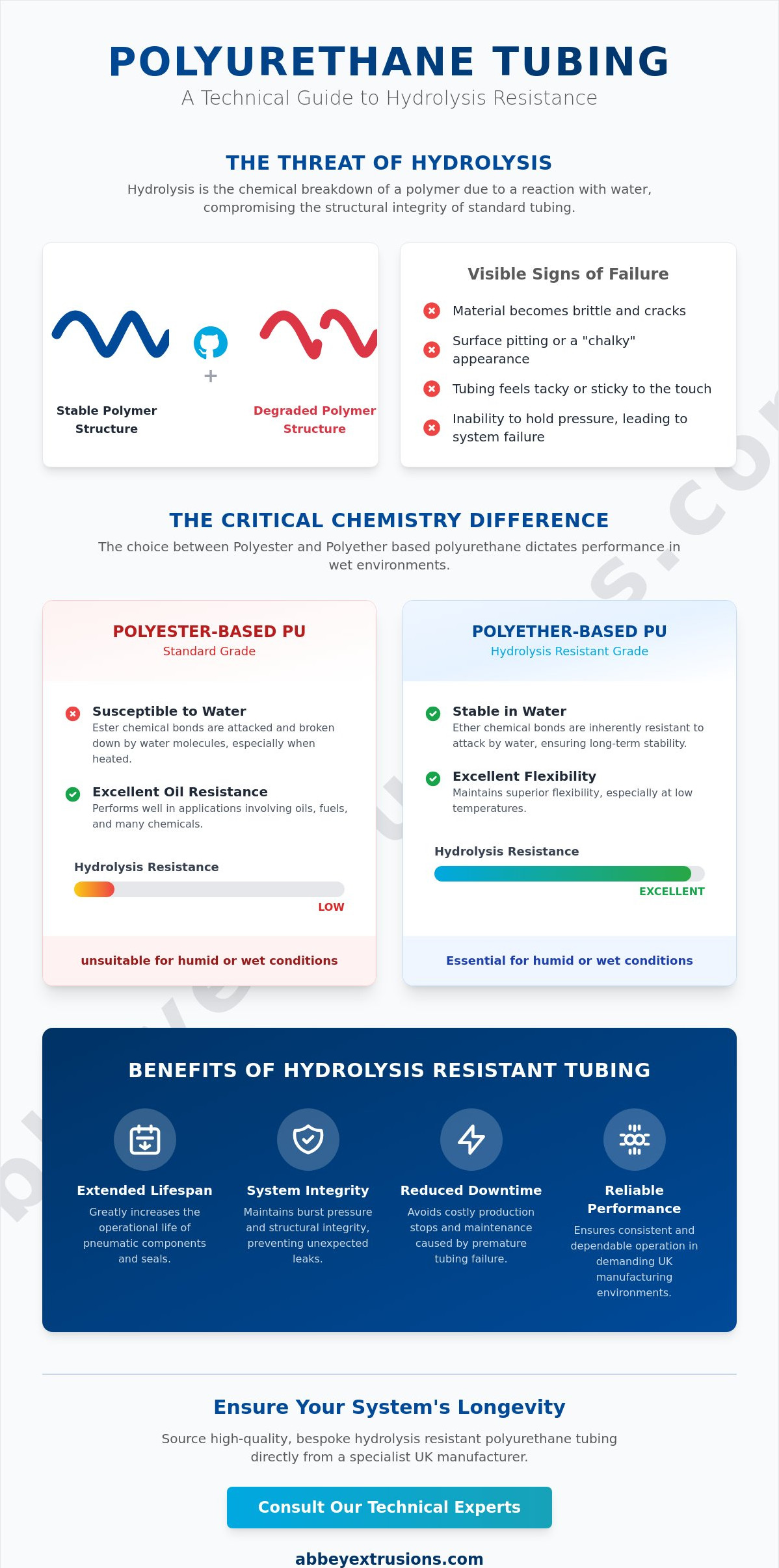
Polyurethane has established itself as an indispensable material within the landscape of modern pneumatics and fluid transfer systems. Its popularity stems from a unique combination of flexibility, high tensile strength, and exceptional abrasion resistance. However, the performance of this polymer is heavily dependent on its specific chemical formulation. In environments where moisture is present, standard grades of polyurethane often suffer from a process known as hydrolysis. This is the chemical breakdown of a compound due to its reaction with water, where water molecules effectively sever the molecular bonds that hold the polymer chains together.
When a system utilizes standard tubing in damp conditions, the material undergoes environmental stress cracking. This isn't merely a surface issue; it's a fundamental failure of the material's structural integrity. The physical signs of hydrolysis damage are often unmistakable once they reach an advanced stage. Engineers may notice the tubing becoming increasingly brittle, or they might observe surface pitting and a "chalky" appearance. In some cases, the tubing may even begin to feel "tacky" or sticky to the touch as the polymer reverts to a lower molecular weight state. These symptoms indicate that the tubing is no longer capable of holding pressure, posing a significant risk of system downtime.
The Science of Hydrolysis in Polymers
The degradation process begins when water molecules penetrate the polymer matrix. Within the structure of Thermoplastic polyurethane (TPU), these molecules attack the susceptible ester or ether linkages. Temperature plays a critical role here; heat acts as a powerful catalyst that accelerates the rate of chemical degradation. In many industrial settings, a combination of high humidity and elevated ambient temperatures creates a "pressure cooker" effect for the material. Visual inspection often fails to catch early stage hydrolysis because the initial molecular weakening happens deep within the tube wall. By the time cracks are visible to the naked eye, the material's burst pressure has already been severely compromised.
Why Standard Polyurethane Fails in Wet Conditions
Most general purpose polyurethane tubes are polyester-based. Whilst these offer excellent resistance to oils and chemicals, they're inherently prone to moisture absorption. Amongst industrial sites, the distinction between occasional splashing and constant immersion is often misunderstood. Even high levels of atmospheric humidity can be enough to trigger the hydrolytic process in ester-based materials over time. Using hydrolysis resistant polyurethane tubing is the only reliable way to ensure longevity in these environments. Our specialized polyurethane tube range utilizes polyether-based chemistry, which is specifically engineered to remain stable when exposed to water. This material choice prevents the autocatalytic breakdown that destroys standard tubing, ensuring your pneumatic circuits remain operational in the most demanding UK manufacturing environments.
To ensure your system specifications align with the appropriate chemical grade, please contact our specialist engineering team for technical assistance.
Comparing Ether Based and Ester Based Polyurethane Chemistry
The distinction between different grades of polyurethane is not merely a matter of brand preference; it is a fundamental chemical reality. Polyurethane is a block copolymer consisting of hard and soft segments. The specific polyol used to create the soft segment determines whether the material is classified as polyester or polyether. This molecular configuration dictates how the tubing will respond when it encounters environmental stressors such as moisture, temperature fluctuations, and chemicals. Understanding these differences is essential for engineers who need to specify hydrolysis resistant polyurethane tubing for long term reliability.
Whilst both variants share the common traits of high abrasion resistance and excellent flexibility, their internal bonds behave very differently. Polyester-based polyurethane contains ester groups that are susceptible to nucleophilic attack by water molecules. Ester bonds simply cannot withstand moisture. In contrast, polyether-based formulations utilise ether linkages which are chemically stable in the presence of water. This chemical stability is the primary reason why polyether is the recognised industry standard for any application involving humidity or direct water contact.
Properties of Polyester Based Tubing
Polyester-based tubing is frequently selected for its superior mechanical strength in dry conditions. It generally offers higher tensile strength and better abrasion resistance than its polyether counterparts. This makes it an ideal choice for pneumatic applications where the air is strictly filtered and dried. Its chemical resistance profile is also distinct; it performs exceptionally well when in contact with oils, fuels, and many solvents. However, its vulnerability to water means that even high levels of atmospheric humidity can lead to the molecular breakdown described in previous sections. In dry, high friction environments, polyester remains a highly effective material for industrial hosing.
Advantages of Polyether Based Formulations
The primary advantage of polyether based hydrolysis resistant polyurethane tubing is its immunity to the chemical degradation caused by water. Beyond this moisture stability, polyether formulations offer several other technical benefits:
- Superior low temperature flexibility, maintaining its elastic properties at temperatures as low as -40°C.
- Inherent resistance to microbial attack and fungal growth, which is critical in stagnant water systems or humid environments.
- Better aging characteristics when exposed to ozone and UV radiation.
These properties make polyether the preferred specification for outdoor installations or refrigerated systems. Our polyurethane tube range is carefully organised to provide the correct chemical grade for your specific environmental challenges.
For more information on bespoke specifications or bulk supply, you can consult with our technical advisors for expert guidance.
Performance Benefits in Demanding Industrial Environments
Selecting the correct polymer grade is a strategic decision that directly impacts the operational efficiency and safety of pneumatic systems. The utilisation of hydrolysis resistant polyurethane tubing provides a level of material stability that standard ester-based alternatives cannot match. By preventing the chemical breakdown of polymer chains, this material ensures that tubing maintains its original mechanical properties throughout its intended service life. This durability is essential for reducing maintenance costs and preventing the unplanned downtime that often follows the failure of lower-grade components.
Material stability is particularly critical when considering the integrity of seals within push-in fittings. As standard polyurethane degrades, it often loses its dimensional precision, either through swelling or becoming brittle. These changes compromise the tight seal required for efficient fluid transfer, leading to gradual pressure loss or sudden blowouts. Using high performance hydrolysis resistant polyurethane tubing ensures that the outer diameter remains constant, preserving the mechanical grip and airtight seal of your fittings even in saturated environments. Additionally, maintaining a consistent internal diameter prevents turbulent flow and ensures that flow rates remain predictable across the entire system.
Resistance to Microbial Attack and Fungal Growth
A significant yet often overlooked consequence of polymer degradation is the increased vulnerability to microbial attack. When moisture triggers hydrolysis in standard tubing, the resulting surface pitting creates microscopic pockets where water and contaminants can collect. These areas become ideal breeding grounds for fungal colonies and bacteria, which can eventually lead to the complete structural failure of the tube. Polyether-based formulations are inherently resistant to this type of biological degradation. This makes them the superior choice for cooling systems, washdown areas, and any industrial application where stagnant water or high humidity might otherwise encourage microbial growth.
Stability in Humid and High Temperature Settings
The combination of heat and moisture acts as a powerful catalyst for chemical breakdown. Recent technical standards, such as the draft international standard ISO/FDIS 11619, highlight that applications involving moisture or water at temperatures exceeding 40°C require materials with verified hydrolysis resistance. Our polyurethane tube range is engineered to maintain its pressure ratings whilst exposed to these challenging conditions. Whether your system operates in tropical climates or near steam-generating equipment, our polyether-based tubing provides the thermal and chemical resilience necessary to prevent premature embrittlement. This ensures that your system remains robust and reliable without the risk of the environmental stress cracking that plagues standard materials.
If you require assistance in determining the most suitable polymer specification for your facility, please enquire with our technical department.
Selecting the Right Tubing for Your Specific Application
Evaluating the specific environmental stressors in your facility is the first step in a successful procurement process. You must determine if the tubing will be subject to constant immersion, high humidity, or frequent washdown cycles. For any system where water is present at temperatures above 40°C, technical standards such as ISO/FDIS 11619 dictate that hydrolysis resistant polyurethane tubing is a mandatory requirement. This standard specifically covers outside diameters ranging from 3mm to 16mm, ensuring that the material can withstand hydrolytic degradation whilst maintaining its structural integrity.
Matching the tubing diameter and wall thickness to your system's working pressure is equally vital. A thicker wall provides a higher burst pressure but may reduce flexibility. Conversely, a thinner wall allows for a tighter bend radius, which is essential in compact pneumatic cabinets. We also offer various colours and translucent options. Transparency is often preferred when fluid visibility is necessary to monitor for air bubbles or contaminants, whilst solid colours allow for easy identification of different lines in complex circuits. In environments where static build-up is a concern, assessing the need for anti-static properties is also a critical part of the selection process.
Critical Factors for Pneumatic and Fluid Systems
Ensuring that your chosen polyurethane tube is compatible with your existing push-in or compression fittings is a prerequisite for a leak-free system. The precision of the outside diameter is what allows the fitting to grip the tube securely. Also, calculating the minimum bend radius prevents flow restriction and unnecessary stress on the material. For outdoor installations, UV resistance must be considered to prevent the polymer from becoming brittle under direct sunlight. These mechanical details are what separate a reliable installation from one prone to failure.
Compliance and Safety Standards for Industry
In beverage production or food processing, you must ensure the material meets specific safety standards. Whilst UKCA marking is not currently possible for plastic piping systems, we ensure our products conform to relevant British Standards and international regulations. Compliance with REACH and RoHS is standard for modern manufacturing to ensure the absence of harmful chemicals. Maintaining full batch traceability is a fundamental business norm that ensures every length of high performance polymer can be verified back to its source. To discuss bulk supply or bespoke profile requirements, contact our UK manufacturing facility.
To request a quotation or discuss a custom extrusion project, please get in touch with our sales office.
Sourcing High Quality Polyurethane Tubing from a UK Manufacturer
Consistent quality is the hallmark of a traditional manufacturing partner. At Abbey Extrusions, we oversee every stage of the production cycle, from raw material selection to the final spooling of the polyurethane tube. This hands-on approach allows us to verify that the polyether-based chemistry remains uncontaminated and correctly processed to achieve its full hydrolytic stability. This level of oversight ensures that the finished product performs exactly as specified, even in the most saturated industrial environments.
The Benefits of Bespoke Extrusion Services
Standard off the shelf sizes do not always meet the requirements of specialised industrial machinery. Our bespoke extrusion services allow clients to specify custom diameters and wall thicknesses that align perfectly with their unique pressure and flow requirements. We also provide the option for specific colours or branding, which is a valuable service for Original Equipment Manufacturers (OEMs) looking to maintain a consistent corporate identity across their product lines. For applications requiring pre-shaped components, our tube forming capabilities allow us to supply tubing that is already set to a specific geometry, reducing assembly time and stress on the material.
Why Expert Technical Support Matters for Procurement
Securing System Longevity with Advanced Material Selection
Selecting the correct polymer grade is a fundamental requirement for maintaining the operational efficiency of your fluid power systems. You'll find that the chemical stability of polyether-based formulations provides the necessary defence against the molecular degradation caused by water and microbial attack. By prioritising materials that withstand environmental stress cracking, you ensure consistent flow rates and secure seals within your fittings.
Contact our technical team to discuss your specialist tubing requirements and ensure your pneumatic installations are built for long term success.
Frequently Asked Questions
What is the main difference between ether and ester polyurethane tubing
The primary distinction lies in the chemical stability of the polymer bonds when they encounter moisture. Ether-based tubing uses polyether polyol, which remains stable and does not react with water molecules. Ester-based tubing uses polyester polyol, which is susceptible to hydrolysis, a process where moisture severs the polymer chains and causes the material to fail. This makes polyether the standard choice for humid or wet industrial settings.
Can I use hydrolysis resistant polyurethane tubing with standard push-in fittings
Standard push-in fittings are fully compatible with hydrolysis resistant polyurethane tubing provided the outside diameter is manufactured to precise tolerances. Our extrusion process ensures the dimensional accuracy required for a secure and leak-free connection. You should also ensure that the fitting material itself, such as nickel-plated brass or stainless steel, is suitable for the specific moisture levels in your environment.
How long does hydrolysis resistant tubing last in wet environments
Polyether-based tubing typically lasts for several years in saturated conditions that would cause standard ester tubing to fail within weeks or months. The exact lifespan depends on the combination of operating pressure and ambient temperature. Because it does not undergo the same chemical breakdown as polyester grades, it maintains its mechanical strength and flexibility for a significantly longer duration in humid climates.
Is polyether polyurethane tubing safe for food and beverage applications
Polyether polyurethane is often preferred for food and beverage applications because it is inherently resistant to microbial attack and fungal growth. It's important to specify a food-grade version of the material to ensure compliance with relevant safety standards. We offer specialised hosing options that meet the hygiene requirements of the beverage industry whilst providing the necessary resistance to washdown chemicals.
Does temperature affect the hydrolysis resistance of polyurethane
Heat acts as a powerful catalyst that accelerates the rate of chemical degradation in susceptible polymers. Technical standards such as ISO/FDIS 11619 specify that hydrolysis resistant materials are required when moisture or water is present at temperatures above 40°C. Whilst polyether is stable, standard ester-based tubing will degrade much faster in warm, humid environments than in cold, dry ones.
How can I tell if my current tubing is failing due to hydrolysis
Physical changes in the material's texture and appearance are the most reliable indicators of hydrolytic failure. You may notice the tubing becoming tacky or sticky to the touch, or it may become exceptionally brittle and develop fine surface cracks. Other signs include surface pitting or a chalky residue, all of which suggest the polymer structure is breaking down and the tube is no longer safe for pressure.
Is hydrolysis resistant tubing more flexible than standard polyurethane
Polyether and polyester grades generally offer comparable flexibility at room temperature, but polyether performs better in cold conditions. It maintains its elastic properties at temperatures as low as -40°C, whereas standard grades may become stiff and prone to kinking. This superior low-temperature flexibility makes hydrolysis resistant polyurethane tubing a more versatile choice for outdoor or refrigerated applications.
Can hydrolysis resistant tubing be used for outdoor applications
Polyether-based tubing is well-suited for outdoor use because it resists ozone, moisture, and microbial degradation. For applications involving prolonged exposure to direct sunlight, we recommend using coloured or UV-stabilised versions to protect the polymer from ultraviolet radiation. This ensures the tubing does not become brittle or lose its tensile strength over years of outdoor service.

Article by
Bryan Cowan
Bryan Cowan is the Founder and Managing Director of Abbey Extrusions Ltd, a leading UK manufacturer of high-quality plastic tubes and hoses. With over 40 years of industry experience, Bryan established the company in 1985, growing it from a start-up into a BS ISO9001-registered supplier for global sectors including aerospace, automotive, and pharmaceuticals.
Disclaimer
This article is intended for informational purposes only. Please ensure you seek expert advice or carry out your own research to confirm the information is suitable for your specific needs.