How many hours of valuable time are lost annually simply because a technician is forced to untangle a stubborn, kinked pneumatic line? We recognise that a cluttered floor is more than just a minor nuisance; it's a significant safety hazard and a clear indicator of operational inefficiency that no professional facility should tolerate. Investing in a high-quality nylon recoil air hose for workshops is not merely an equipment upgrade, but a strategic decision to enhance the safety and flow of your production environment.
You'll discover why these hoses offer a superior balance of elastic memory and chemical resilience, ensuring your workstation remains tidy and your equipment stays free from kinking. We'll provide the technical insights needed to specify the correct dimensions for your specific pneumatic tools, whilst explaining how our manufacturing expertise ensures these hoses return to their original shape even after years of intensive industrial use. This guide details the material advantages of nylon and how to implement these solutions for long-term reliability.
Key Takeaways
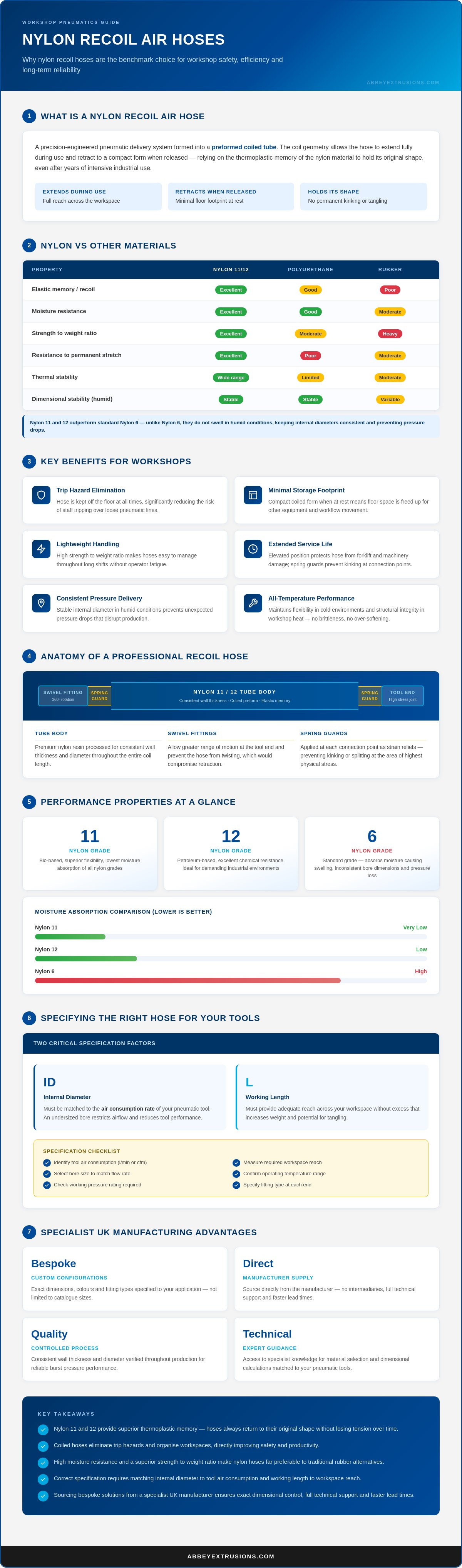
- Learn why the superior thermoplastic memory of Nylon 11 and 12 ensures your hoses always return to their original shape without losing tension over time.
- Discover how a nylon recoil air hose for workshops effectively eliminates dangerous trip hazards and organises your workspace for maximum productivity.
- Understand the technical benefits of high moisture resistance and a superior strength to weight ratio compared to traditional rubber alternatives.
- Master the specific calculations required to match hose internal diameters and working lengths to the precise air consumption of your pneumatic tools.
- Explore the logistical and quality advantages of sourcing bespoke tube forming solutions directly from a specialist UK manufacturer.
To discuss your specific manufacturing requirements or to request a quote for bespoke hose configurations, please reach out to our technical department via our contact page.
Understanding the Design of Nylon Recoil Air Hoses
A nylon recoil air hose for workshops is a precision engineered pneumatic delivery system configured as a preformed coiled tube. This specific geometry allows the hose to expand extensively during active use and retract into a compact, manageable form once the operator releases it. The design is not merely a matter of convenience; it relies heavily on the advanced thermoplastic properties of the base material to retain its memory. This ensures that the hose does not become a permanent trip hazard or a tangled mess after a few weeks of heavy industrial application. In professional environments where floor space is at a premium, these self storing lines are indispensable tools for maintaining a lean and efficient workflow.
The structural integrity of these hoses is derived from the science of synthetic polymers like nylon, which provide a high degree of tensile strength and resistance to surface wear. This material choice is critical because it allows the wall of the tube to be thin enough for flexibility whilst remaining robust enough to handle high pressure air without deformation. By selecting a nylon recoil air hose, workshops benefit from a product that resists the permanent stretching that often plagues cheaper polyurethane alternatives. This reliability is why nylon remains the benchmark material for high performance recoil lines in demanding industrial sectors.
The Purpose of Self Storing Air Lines
The primary function of a self storing line is the enhancement of workstation safety and organisation. By keeping the pneumatic line off the workshop floor, these hoses significantly reduce the risk of accidents caused by staff tripping over loose equipment. The coiled design also allows for maximum reach across a wide area whilst maintaining a very small storage footprint when the tool is at rest. This elevation serves a protective function, as it prevents the hose from being crushed by moving vehicles, such as forklifts, or damaged by heavy machinery being moved through the workspace. It's a simple yet effective method of prolonging the lifespan of your pneumatic infrastructure.
Key Components of a Professional Recoil Hose
A high quality recoil hose is composed of several carefully selected components that work in unison to provide reliable service. The main tube body is manufactured from premium nylon resin, which is processed to ensure consistent wall thickness and diameter throughout the coil. To enhance usability, professional hoses often include swivel fittings at the tool end. These fittings allow for greater range of motion and prevent the hose from twisting, which would otherwise compromise the coil's ability to retract. Additionally, heavy duty spring guards are often applied at the connection points. These guards act as strain reliefs, preventing the tube from kinking or splitting where it meets the fitting; this is the area under the most physical stress during daily use.
If you require technical assistance with material selection or wish to request a bespoke manufacturing quote, please get in touch via our contact page.
The Technical Performance of Nylon 11 and 12 in Pneumatic Systems
Nylon 11 and Nylon 12 are the preferred polymers for high-end pneumatic applications due to their exceptional dimensional stability. Unlike standard Nylon 6, which can swell in humid conditions, these higher grades offer superior resistance to moisture absorption. This ensures that the internal diameter remains constant, preventing pressure drops or fitting failures that can disrupt production. By maintaining their physical properties even in damp environments, these materials provide a level of reliability that lower grade plastics simply cannot match.
Specifying a nylon recoil air hose for workshops manufactured from these resins provides a high strength to weight ratio. This makes the hose significantly easier for technicians to handle throughout a long shift without sacrificing the burst pressure rating required for industrial tools. Thermal stability is another hallmark of these materials. They maintain their flexibility across a wide temperature range, preventing the hose from becoming brittle in cold environments or overly soft in workshop heat. This consistent performance ensures that your pneumatic systems operate at peak efficiency regardless of seasonal changes.
Superior Spring Memory and Elasticity
The molecular structure of Nylon 11 and 12 allows for repeated expansion without permanent deformation. This spring memory is what defines a professional recoil hose. Whilst polyurethane is often used for cheaper alternatives, it lacks the long term coil retention of nylon. Over time, polyurethane hoses tend to sag and lose their ability to retract fully, eventually trailing on the floor. Our precise tube forming process ensures that every coil is set with the correct tension to maintain its shape for years of intensive use. This resilience is essential for maintaining a tidy and safe workstation.
Abrasion and Chemical Resistance
Workshops are harsh environments where hoses are frequently dragged across rough concrete floors or come into contact with sharp metal edges. Nylon's high surface hardness provides excellent abrasion resistance, protecting the integrity of the air line from external wear. Additionally, its chemical profile is ideally suited for automotive assembly lines where exposure to petrol, grease, or solvents is a daily occurrence. Nylon remains a favourite amongst engineers because it doesn't degrade or become gummy when exposed to common workshop fluids.
Adhering to OSHA safety standards for pneumatic tools requires equipment that can withstand these rigours without failing. Nylon's resilience makes it a stable choice for these high stakes environments. If you need help choosing the right grade of Nylon tube for your specific application, you can consult with our technical team to find a durable solution.
To discuss how our pneumatic solutions can improve your workstation safety or to request a custom quote, please speak with our technical team.
Improving Workshop Efficiency and Safety with Coiled Hoses
The operational efficiency of a modern manufacturing facility depends heavily on the logical organisation of its pneumatic infrastructure. Traditional straight hoses often lead to a cluttered environment, where long lengths of heavy rubber or PVC trail across walkways and underfoot. By integrating a nylon recoil air hose for workshops, managers can effectively reclaim floor space and streamline their assembly processes. The self-retracting nature of the coil ensures the line is only as long as the current task requires, keeping the floor clear of obstructions that could otherwise lead to workplace accidents and equipment damage.
Safety is a regulatory necessity, not merely a preference. Citing OSHA safety standards for pneumatic tools highlights the critical importance of secure hose connections and hazard reduction in industrial settings. Trailing lines amongst moving machinery or near pedestrian paths are primary causes of trips and falls. Coiled hoses mitigate these risks by suspending the majority of the hose length above the work surface or retracting it back to the air source immediately after use. This creates a safer, more professional environment whilst protecting the hose itself from being accidentally crushed by vehicles or heavy equipment.
Ergonomic Benefits for Tool Operators
The physical weight of equipment has a direct impact on operator fatigue and long-term musculoskeletal health. Nylon is significantly lighter than reinforced rubber or heavy-duty PVC, which reduces the constant strain placed on the operator's wrist and forearm during extended shifts. This lightweight profile, combined with the predictable recoil behaviour of a well-manufactured coil, allows for smoother and more precise tool movement. In addition, the inclusion of swivel endings ensures the tool remains balanced in the hand, preventing the hose from fighting against the operator's natural range of motion during complex tasks.
Maintenance and Longevity
To ensure a nylon recoil air hose for workshops provides a long service life, regular maintenance is essential. Whilst nylon is chemically resilient, keeping the surface free from excessive grit and oil build-up prevents external abrasion. Operators should regularly inspect the coil structure for signs of fatigue, such as permanent stretching or kinking near the fittings. Correct storage is equally vital. When not in use, the hose should be allowed to retract fully to its neutral position. Over-stretching the hose beyond its rated working length for prolonged periods can eventually degrade the spring memory of the polymer, leading to a loss of tension.
If you require expert advice on dimensioning your pneumatic system for specific industrial applications, please speak with our technical department for assistance.
How to Choose the Right Diameter and Length for Your Tools
Selecting the correct specifications for a nylon recoil air hose for workshops is a critical engineering step that directly impacts tool performance. It's not merely a choice of aesthetics or brand. You must consider the physical constraints of the workspace alongside the technical requirements of the pneumatic tools themselves. A poorly specified hose will lead to excessive pressure drops, operator frustration, and premature equipment failure. Precision in these measurements ensures that the air supply remains consistent and the workspace remains safe.
The working pressure of your pneumatic system must also be matched to the hose's rating. Nylon is favoured for its high burst pressure, but it's essential to check that the specific tube wall thickness is appropriate for your compressor's output. Secure, leak free connections are equally vital. Selecting high quality fittings that are compatible with the hose diameter prevents air loss, which is one of the most common causes of industrial energy waste. A well configured system should operate silently and efficiently without the hiss of escaping air at the connection points.
Understanding Working Length and Reach
A frequent misunderstanding in workshop procurement is the difference between total material length and usable reach. A 10 metre hose does not provide 10 metres of travel. Because of the coil's tension, the effective working length is typically only 60% to 75% of the total tube length. Attempting to stretch the hose beyond this point places undue stress on the fittings and risks permanently deforming the coil. To maintain the spring memory achieved through our tube forming process, you must select a total length that allows for comfortable movement across the entire work centre without overstretching. The diameter of the coil itself also influences the force required to expand the hose; a larger coil diameter generally offers a softer stretch, which is often preferred for light assembly tasks.
Internal Diameter and Air Flow
The internal diameter (ID) of the hose determines the volume of air that can reach the tool. Common workshop sizes include 6mm and 10mm. Smaller diameters like 6mm are suitable for low consumption tools such as blow guns or small pneumatic staplers. However, high torque tools like impact wrenches or large sanders require a 10mm ID to prevent starving the motor of air. It is also vital to account for the pressure drop that occurs over the length of the hose. Whilst a nylon recoil air hose for workshops is efficient, a longer hose with a narrow ID will inevitably result in lower pressure at the tool end.
Matching these parameters with your air consumption requirements ensures your tools operate at their intended capacity. Our nylon recoil air hose solutions are designed to provide a reliable air supply with a significant safety margin. If you are uncertain which dimensions will best serve your production line, we recommend you consult with our specialists to ensure your tools receive the correct volume of air for optimal performance.
For technical specifications or to discuss a custom production run, please contact our specialist team.
Specialist UK Manufacturing of Custom Nylon Recoil Solutions
Sourcing a nylon recoil air hose for workshops directly from a UK manufacturer offers significant logistical and technical advantages. At Abbey Extrusions, we maintain total control over the entire production lifecycle, from the initial selection of high grade resins to the final shaping stages. This direct oversight ensures that our Nylon 11 and 12 flexible tubing meets rigorous industrial standards, providing a level of reliability that imported, mass produced alternatives often lack. Our technical team provides direct support, helping clients navigate the complexities of material selection and pressure ratings for their specific workshop environments.
Choosing a domestic partner for your pneumatic infrastructure means you've access to deep technical expertise and shorter lead times. We don't just supply standard products; we provide engineered solutions that are built to withstand the specific rigours of British industrial settings. By maintaining our manufacturing base in the UK, we can guarantee the traceability of our materials and the consistency of our manufacturing tolerances. This commitment to quality is what builds long term trust with our partners in the automotive, aerospace, and manufacturing sectors.
The Abbey Extrusions Manufacturing Process
We utilise decades of experience in the plastic extrusion sector to develop high performance pneumatic solutions. The core of our success lies in precision tube forming. By applying controlled heat and tension, we ensure every coil maintains a consistent diameter and the necessary spring memory to retract effectively over thousands of cycles. We remain committed to using only high quality raw materials, as the purity of the nylon resin is the single most important factor in preventing the environmental stress cracking that can lead to catastrophic air leaks in industrial settings. Our methodical approach ensures that the finished nylon recoil air hose performs exactly as specified.
Bespoke Options for Industrial Clients
Industrial requirements are rarely uniform, which is why we offer bespoke options that allow clients to tailor their pneumatic lines to their specific operational needs. This includes custom colours, which are essential for companies looking to match their branding or implement safety colour coding to distinguish between different gas lines or pressure zones. We also provide specific endings and fittings that are perfectly suited to your existing pneumatic infrastructure, ensuring a seamless integration. For environments where mechanical wear is particularly high, we recommend integrating nylon spiral cut hose guards. These guards provide an additional layer of protection against abrasion without compromising the flexibility of the recoil line.
Optimising Workshop Productivity with Precision Pneumatics
Selecting the correct pneumatic infrastructure is a fundamental step in ensuring long-term workshop efficiency and personnel safety. By integrating a high-performance nylon recoil air hose for workshops, you're investing in a solution that combines the superior elastic memory of Nylon 11 and 12 with the resilience needed for harsh industrial environments. These hoses don't just organise your space; they provide the technical stability required for consistent tool performance and improved operator comfort during intensive shifts.
As a specialist UK manufacturer since 1985, Abbey Extrusions remains dedicated to delivering excellence in Nylon 11 and 12 high-performance tubing. Our comprehensive custom tube forming and bespoke extrusion services allow us to tailor every technical detail of your pneumatic lines to meet unique industrial requirements. We invite you to contact Abbey Extrusions for a bespoke quote on nylon recoil air hoses and discover how our decades of manufacturing expertise can enhance your operational workflow. We look forward to partnering with you to create a more efficient and safer production environment.
Frequently Asked Questions
What is the difference between a nylon and a polyurethane recoil hose
Nylon 11 and 12 offer significantly better elastic memory and chemical resistance compared to polyurethane. Whilst polyurethane is more flexible and often cheaper, it lacks the structural integrity to maintain its coil shape under intensive industrial use and tends to sag over time. Nylon remains the professional choice for environments requiring long term durability and resistance to common workshop solvents.
How do I calculate the working length of a nylon recoil air hose
The working length of a nylon recoil air hose for workshops is typically calculated as 60% to 75% of the total material length. You shouldn't stretch the hose to its full linear length as this causes permanent deformation of the coils and places stress on the fittings. For example, a 10 metre hose provides a comfortable reach of approximately 7 metres without compromising the spring tension.
Can nylon recoil hoses be used with all types of pneumatic tools
These hoses are compatible with most pneumatic tools provided the internal diameter and pressure ratings match the tool's requirements. Small hand tools like blow guns work well with 6mm hoses, whereas heavy duty impact wrenches require a 10mm diameter to ensure sufficient air volume. Always verify that the tool's operating pressure doesn't exceed the hose's rated burst pressure for safety.
Is a nylon recoil air hose for workshops resistant to oil and petrol
Nylon 11 and 12 resins are naturally resistant to a wide range of industrial chemicals, including oils, petrol, and common workshop solvents. This makes them ideal for automotive assembly lines and garage environments where exposure to hydrocarbons is frequent. Unlike rubber or standard PVC, high grade nylon will not swell or degrade when in contact with these substances, ensuring a longer service life.
Why has my recoil hose lost its spring and how can I prevent this
A recoil hose loses its spring primarily through overstretching beyond its rated working length or through exposure to extreme heat. To prevent this, ensure the operator isn't pulling the hose to its physical limit during daily tasks. Correct storage in its neutral, retracted position when not in use also helps preserve the molecular memory of the nylon polymer and maintains its tension.
What fittings are standard for nylon recoil air hoses in the UK
Standard fittings for these hoses in the UK typically include BSP threaded swivel endings or quick release couplings. Swivel fittings are particularly recommended because they prevent the hose from twisting during operation, which protects the coil structure. We can provide bespoke fittings tailored to your existing pneumatic infrastructure to ensure leak free operation across your entire facility.
Are there specific temperature limits for using nylon coiled hoses
Nylon coiled hoses remain stable across a broad temperature spectrum, typically ranging from -40 degrees Celsius to +80 degrees Celsius. They maintain their flexibility in cold conditions where other materials might become brittle and prone to cracking. However, it's essential to consult the technical data as burst pressure ratings will decrease as the operating temperature rises towards the upper limit.
How does the internal diameter of the hose affect my air tool performance
The internal diameter directly dictates the volume of compressed air delivered to your tool. A narrow diameter restricts the flow, which can cause high torque tools to lose power or stall under load. Selecting a 10mm internal diameter for air hungry tools ensures they receive the necessary volume for optimal performance, whilst 6mm is usually sufficient for light duty pneumatic applications.

Article by
Bryan Cowan
Bryan Cowan is the Founder and Managing Director of Abbey Extrusions Ltd, a leading UK manufacturer of high-quality plastic tubes and hoses. With over 40 years of industry experience, Bryan established the company in 1985, growing it from a startup into a BS ISO9001-registered supplier for global sectors including aerospace, automotive, and pharmaceuticals.
Disclaimer
This article is intended for informational purposes only. Please ensure you seek expert advice or carry out your own research to confirm the information is suitable for your specific needs.