Industrial accidents resulting in chemical releases increased to 131 incidents in 2025, which is a trend that underscores the devastating potential of system failure. At the heart of many of these events is a fundamental error in material specification. The risk of using incorrect tubing for chemicals is not merely a matter of premature wear; it represents a critical technical hazard that can lead to workplace accidents, environmental leaks, and severe regulatory penalties. We recognise that navigating complex compatibility charts is often a source of confusion, whilst the pressure to maintain operational uptime remains a constant priority for your engineering teams.
Discover the technical and safety hazards associated with poor material selection and learn how to specify the correct tubing for chemical compatibility. This article provides the expert insight required to ensure your systems remain both safe and compliant with current REACH and RoHS standards. We shall examine the mechanical hazards of polymer degradation and outline a methodical framework for selecting the most cost-effective materials that provide durable performance and safety for your specific industrial applications. Through precise engineering and material knowledge, you can avoid catastrophic failures and maintain the high standards of safety that your facility requires.
Key Takeaways
- Identify the technical signs of polymer degradation, such as swelling and embrittlement, to prevent catastrophic system failure and hazardous leaks.
- Minimise the risk of using incorrect tubing for chemicals by adhering to a formal specification protocol that prioritises verified compatibility data.
- Compare the technical advantages of high performance materials like Nylon 11 and Nylon 12 against standard alternatives for aggressive chemical transport.
- Learn how to adjust pressure ratings and material selections based on the specific thermal conditions and reactivity of your industrial application.
- Explore the benefits of bespoke extrusion profiles and expert material selection provided by a specialist UK manufacturer to solve unique fluid handling challenges.
To ensure your fluid handling systems are specified correctly for your unique industrial requirements, please contact our technical team for professional guidance and material specifications.
Understanding the Hidden Dangers of Chemical Incompatibility
Chemical incompatibility occurs when a fluid reacts adversely with the polymer structure of a delivery system. This reaction is not merely a surface level issue; it represents a fundamental failure of the material to remain inert in the presence of aggressive media. The risk of using incorrect tubing for chemicals extends far beyond simple leaks. It involves a complex interplay of molecular changes that can compromise the integrity of an entire industrial facility. A thorough Understanding Chemical Incompatibility allows engineers to predict how specific polymers will behave when they come into contact with volatile solvents, acids, or bases.
Safety executives frequently highlight the specific dangers of adsorption amongst gas sampling systems. In these environments, gas molecules adhere to the internal wall of the tube. This leads to inaccurate sensor readings and potentially dangerous false negatives in gas detection. Conversely, leaching involves the migration of tubing constituents, such as stabilisers or plasticisers, into the transported fluid. Whilst a tube may appear visually clear and functional, internal degradation can occur undetected. This hidden decay often compromises the fluid's integrity long before any external signs of structural failure become apparent to the operator.
The Process of Chemical Attack
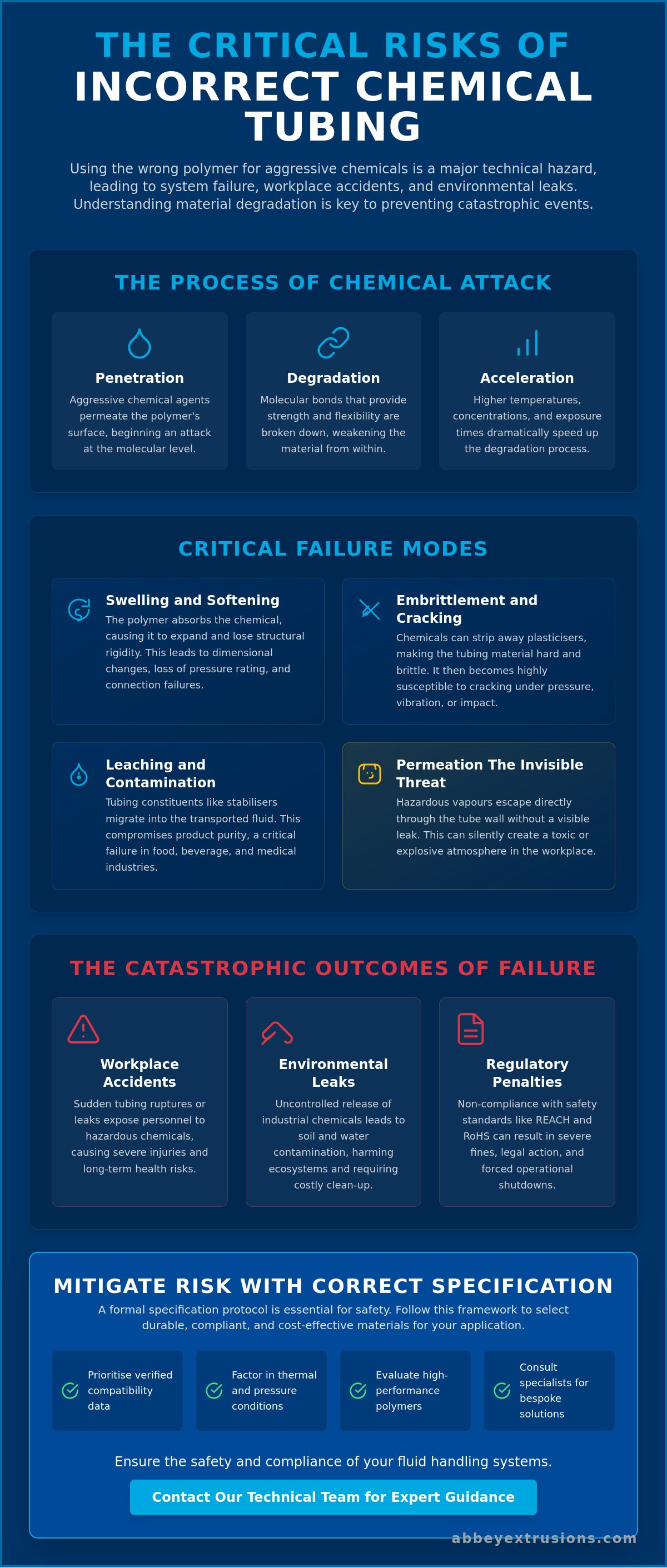
Chemical attack begins when aggressive agents penetrate the polymer matrix of the tube. These substances work to break the molecular bonds that provide the material with its mechanical strength and flexibility. The rate of this degradation is heavily dependent on the concentration of the chemical and the duration of exposure. Higher temperatures often accelerate these reactions, turning a manageable risk into a certain failure. Engineers must distinguish between surface staining, which might be cosmetic, and structural failure. Structural failure often manifests as a significant reduction in the tube's burst pressure rating, which creates a volatile environment for workers.
Contamination and Product Purity
For sensitive industrial applications, the risk of using incorrect tubing for chemicals includes the leaching of additives into the process stream. These additives can alter the chemical composition of the fluid, which is a critical concern for brewery hose and food grade applications where purity is a non negotiable requirement. Using an uncertified PVC tube in these environments could introduce unwanted flavours or even toxic substances into the production line. Maintaining the highest standards of product purity requires a methodical approach to material selection, ensuring that every component of the system is fully compliant with relevant safety regulations.
If you require technical assistance in identifying the correct polymer for your fluid handling system, please reach out to our engineering specialists for a comprehensive consultation.
Mechanical Failure Modes Caused by Incorrect Tubing Selection
Mechanical failure is the physical manifestation of the chemical attacks described previously. Whilst chemical incompatibility begins at a molecular level, the resulting mechanical failure is often sudden and catastrophic. The risk of using incorrect tubing for chemicals manifests in several distinct failure modes that compromise the structural integrity of the entire fluid handling system. Beyond visible leaks, engineers must account for the danger of permeation. This is a process where hazardous vapours or gases escape through the tube wall without any visible breach or rupture, potentially creating a toxic or explosive atmosphere in the workplace.
Understanding these failure modes is a vital component of industrial safety. Implementing robust Risk Mitigation Strategies is essential to prevent the mechanical failures that lead to system downtime and personnel injury. Each polymer reacts differently to stress and chemical exposure, meaning a material that performs well in one application may fail rapidly in another.
Swelling and Softening
When solvents or certain oils are transported through an incompatible tube, the polymer matrix can absorb the fluid. This causes the material to swell and lose its original dimensions. This physical expansion is particularly dangerous at connection points, as the increased diameter can cause the tube to slip off its fittings, resulting in a high pressure "blow-off". Swelling reduces the effective burst pressure of a tube by compromising the molecular density and wall thickness of the polymer. This softening also makes the tube more susceptible to external abrasion and kinking, which further restricts flow and increases system pressure.
Embrittlement and Stress Cracking
Embrittlement occurs when aggressive chemicals, such as certain acids or even prolonged UV exposure, strip the plasticisers from materials like PVC tube or Polyurethane tube. These plasticisers are what provide the tubing with its flexibility; once they are removed, the polymer becomes hard and prone to shattering. Environmental stress cracking is a related phenomenon where the combination of chemical exposure and mechanical tension causes small cracks to propagate through the material. This typically occurs at bends or where the tube is stretched over a fitting. In high pressure systems, these cracks can lead to a catastrophic burst without any prior warning. If you are unsure about the long term stability of your current materials, you may wish to speak with our technical department to evaluate your specific chemical environment.
To ensure your industrial systems are equipped with the most resilient materials for your specific chemical environment, we invite you to consult with our technical specialists for a detailed compatibility assessment.
Evaluating Material Performance Across Different Chemical Groups
Selecting a polymer requires a methodical comparison of chemical resistance ratings against the specific media being transported. Whilst standard PVC tube is suitable for water and dilute chemicals, it often fails when exposed to concentrated acids or industrial solvents. The risk of using incorrect tubing for chemicals becomes most apparent when comparing these common plastics with high performance engineering polymers. Nylon 11 and 12, for example, offer significantly higher resistance to cracking and swelling than standard PVC, whilst maintaining excellent dimensional stability under pressure.
Polyurethane (PU) represents another critical material group, particularly valued for its abrasion resistance and flexibility. Polyurethane tube performs exceptionally well amongst oils and fuels, making it a staple in pneumatic and lubrication systems. However, users must be cautious when using PU with water based fluids at high temperatures, as this can lead to hydrolysis. This chemical breakdown weakens the tube from within, eventually resulting in the mechanical failure modes discussed in the previous section. We always advise checking the specific chemical grade of PU to ensure it suits your unique operating conditions.
Nylon and Polyethylene Performance
We frequently recommend Nylon tube for applications involving hydrocarbons and oils due to its superior chemical inertness. This material provides a robust barrier against many industrial fluids that would degrade lesser polymers. For more detailed data on pressure ratings and chemical behaviour, you may refer to our technical guide to nylon tubing. In contrast, low density polythene tube offers a cost effective solution for transporting many chemicals, though it possesses distinct limitations. LDPE is prone to failure when exposed to strong oxidising agents or certain detergents, which can cause environmental stress cracking over time.
Fluoropolymers for Aggressive Chemicals
When dealing with the most aggressive chemical environments, high performance Fluoropolymers such as PTFE, FEP, or PFA are strictly necessary. These materials are considered almost universally inert, resisting nearly all industrial chemicals, solvents, and corrosive acids. The primary trade off for this near total chemical resistance is mechanical flexibility; PTFE is significantly stiffer than PU or LDPE. In highly corrosive laboratory environments or specialist chemical processing plants, these materials provide the necessary safety margin to mitigate the risk of using incorrect tubing for chemicals. Selecting the right grade ensures that the system remains safe and operational without the need for frequent, costly replacements.
To secure the long term reliability of your chemical transfer lines, we recommend that you contact our engineering department for a comprehensive review of your material specifications.
Risk Mitigation Strategies for Industrial Fluid Handling Systems
The risk of using incorrect tubing for chemicals can be substantially reduced by establishing a formalised procurement protocol. This process must begin with a rigorous cross reference of the intended fluid against verified chemical compatibility charts. Engineers shouldn't assume that a material which handled a dilute acid will perform equally well with a concentrated version of the same substance. This protocol should also include a review of the fluid's concentration and the expected duration of exposure, as these factors directly influence the longevity of the chosen polymer. Organising safety training for maintenance staff is also a vital step. This ensures that the personnel on the factory floor can identify early signs of degradation, such as subtle changes in texture or flexibility, before a breach occurs.
Accounting for Temperature and Pressure
Heat acts as a catalyst for chemical reactions, significantly increasing the rate at which aggressive agents attack a polymer. As operating temperatures rise, the molecular bonds within the tube weaken, which necessitates a derating of the manufacturer's pressure specifications. If a system operates at 50 degrees Celsius, its burst pressure will be considerably lower than the rating provided for room temperature. Operators should remember that chemical resistance ratings are typically based on ambient temperatures of approximately 20 to 23 degrees Celsius. Failing to account for this thermal influence is a common cause of premature system failure in industrial environments.
Implementing Inspection Protocols
Implementing a regular inspection and replacement schedule is the most effective way to manage the lifecycle of your fluid handling components. A structured replacement schedule shouldn't just wait for failure; it should be based on the known degradation rates of the polymer when exposed to specific chemical groups. During routine maintenance, staff should look for discolouration, hardening, or unusual swelling, as these are clear indicators of chemical attack. Maintenance teams should also check fittings and connections for signs of chemical bypass, where the fluid has begun to degrade the seal between the tube and the connector. For systems where external wear is a concern, we suggest using nylon spiral cut hose guards to provide essential mechanical protection against abrasion and impact.
If you require a bespoke material assessment for your facility, please speak with our technical consultants to discuss your requirements.
To discuss your specific technical requirements and ensure your material selection meets the highest safety standards, please get in touch with our specialist team today.
Specifying High Performance Solutions with Abbey Extrusions
Abbey Extrusions is a specialist UK manufacturer of high performance tubing, dedicated to providing precision engineered solutions for the most demanding industrial environments. We understand that the risk of using incorrect tubing for chemicals can have catastrophic consequences for both personnel safety and operational efficiency. By sourcing directly from a British manufacturer, you gain access to decades of collective expertise and a transparent supply chain that prioritises technical competence over mass production. Our role is to act as a stable partner, guiding you through the complexities of polymer science to select the most reliable material for your specific application.
Working with a domestic manufacturer ensures that technical support is readily available when you face complex specification challenges. We don't merely supply components; we provide the engineering insight necessary to maintain system integrity. This direct relationship allows for a more methodical approach to material selection, where every technical parameter is considered before production begins. This level of oversight is essential for avoiding the hidden dangers of chemical attack and mechanical failure that often plague systems using inferior or incorrectly specified tubing.
Bespoke Manufacturing and Tube Forming
Every industrial facility faces unique fluid handling challenges that standard off the shelf products may not adequately address. Our tube forming services allow for the creation of custom shapes and configurations, which significantly reduces mechanical stress points in a system. By pre forming tubes to fit specific layouts, we eliminate the tension that often leads to the environmental stress cracking discussed earlier. For industries with very specific requirements, such as the transport of volatile combustibles, our diesel fuel hose offers a proven solution that meets rigorous safety benchmarks. We encourage you to consult with our technical team to receive tailored material recommendations that account for your specific chemical concentrations and operating temperatures.
Quality Assurance and British Manufacturing
Since our establishment in 1985, we've maintained a steadfast commitment to quality control and engineering precision. This longevity in the plastic extrusion industry allows us to offer a level of reliability that only comes from decades of practical experience. Whether you require the high abrasion resistance of our polyurethane tube or the chemical inertness of our fluoropolymer range, every product undergoes strict testing to ensure it meets our exacting standards. We believe that excellence is a fundamental business norm, not just an occasional promise. To mitigate the risk of using incorrect tubing for chemicals in your facility, we invite you to contact us for specific technical data sheets and material certifications. Our team is ready to provide the precise documentation required to ensure your systems remain safe, compliant, and cost effective for the long term.
For further assistance in selecting compliant materials for your industrial systems, please contact our technical specialists for a professional consultation.
Securing Industrial Systems Through Precise Material Specification
Maintaining the integrity of industrial fluid handling systems requires a proactive approach to polymer science. As we have explored, the risk of using incorrect tubing for chemicals extends far beyond simple maintenance costs, potentially leading to catastrophic mechanical failures and hazardous workplace incidents. By implementing a rigorous selection protocol that accounts for chemical concentration and thermal influences, engineers can ensure their facilities remain both safe and compliant with current REACH and RoHS standards.
Abbey Extrusions has been a specialist UK manufacturer since 1985, providing the technical competence needed to navigate complex material challenges. We specialise in high performance Nylon and Fluoropolymers, whilst our bespoke extrusion and tube forming capabilities allow us to eliminate mechanical stress points in your unique layouts. Please contact our technical team to discuss your chemical compatibility requirements and receive expert material recommendations. We look forward to helping you build a safer, more reliable industrial environment through engineering excellence and a commitment to long term partnership.
Frequently Asked Questions
What is the most common cause of chemical tubing failure
The primary cause is selecting a polymer that lacks chemical compatibility with the fluid being transported. This mismatch initiates a molecular breakdown that eventually compromises the structural integrity of the system. Operators must account for the specific chemical grade and concentration to avoid the risk of using incorrect tubing for chemicals, as even small errors in specification can lead to rapid degradation.
Can I use standard PVC tubing for transporting petrol or diesel
Standard PVC is unsuitable for hydrocarbons like petrol or diesel because these fluids extract the plasticisers that keep the material flexible. This process causes the tube to shrink and become brittle, leading to cracks and leaks. For fuel transport, we recommend using specialised Nylon 11 or 12, or a dedicated Diesel Fuel Hose designed for hydrocarbon resistance and long term stability.
How does chemical concentration affect tubing selection
Higher concentrations of a chemical are significantly more aggressive and can degrade materials that might otherwise handle dilute versions. A polymer that remains stable with a 10% acid solution could fail rapidly when exposed to a 50% concentration. Engineers should always consult compatibility data that matches the exact concentration of the media in their system to ensure the safety of the application.
What is environmental stress cracking in plastic hoses
Environmental stress cracking occurs when a tube is subjected to both chemical exposure and mechanical tension simultaneously. This often happens at bends or where the tube is stretched over a fitting. The chemical weakens the molecular bonds, allowing the mechanical stress to pull the polymer apart and create small, propagating cracks that eventually cause a catastrophic burst without prior warning.
Why does some tubing become brittle after contact with chemicals
Brittleness is typically the result of chemical leaching, where the fluid being transported strips away the plasticisers or stabilisers from the polymer matrix. Materials like PVC and Polyurethane rely on these additives for their flexibility. Once these substances are removed, the tube loses its elastic properties and becomes prone to shattering under pressure or during routine movement within the facility.
Is PTFE tubing always the best choice for chemical resistance
PTFE offers almost universal chemical resistance, but it is not always the optimal choice for every application. Whilst it handles aggressive acids and solvents, it is significantly stiffer and more expensive than materials like Nylon or LDPE. In many industrial scenarios, a correctly specified Nylon tube provides the necessary safety margin whilst offering better flexibility and superior cost effectiveness for the operator.
How do I know if my tubing is leaching chemicals into the fluid
Leaching often manifests as a change in the fluid's colour or a clouding of the tubing material itself. In sensitive applications like brewery or food grade systems, even subtle leaching can alter the taste or purity of the product. Regular laboratory testing of the fluid can identify the presence of leached plasticisers that are not visible to the naked eye during a standard inspection.
What role does temperature play in chemical compatibility
Temperature acts as a catalyst that increases the rate of chemical attack on a polymer. The risk of using incorrect tubing for chemicals is amplified in high heat environments, as the material's mechanical strength and pressure rating decrease as the temperature rises. Compatibility charts are usually based on ambient temperatures, so any increase in heat requires a careful derating of the system's technical specifications.

Article by
Bryan Cowan
Bryan Cowan is the Founder and Managing Director of Abbey Extrusions Ltd, a leading UK manufacturer of high-quality plastic tubes and hoses. With over 40 years of industry experience, Bryan established the company in 1985, growing it from a startup into a BS ISO9001-registered supplier for global sectors including aerospace, automotive, and pharmaceuticals.
Disclaimer
This article is intended for informational purposes only. Please ensure you seek expert advice or carry out your own research to confirm the information is suitable for your specific needs.